✕ Not vegan Conventional collagen is not vegan or vegetarian. Bovine collagen comes from cattle, porcine collagen from pigs, marine collagen from fish, and poultry collagen from animals such as chickens. Hydrolysed collagen and collagen peptides keep that origin after processing. A product marketed as “vegan collagen” may instead be a plant-based nutrient blend or an emerging recombinant protein, so the ingredient list—not the front-label phrase—provides the real answer.
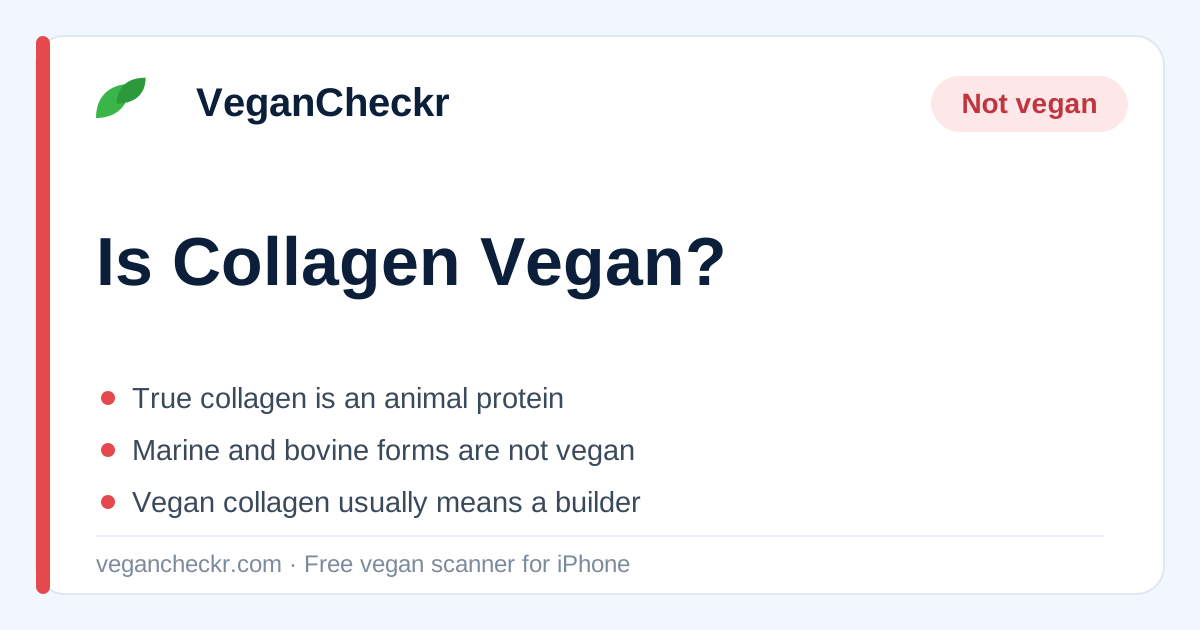
This verdict is unusually clear because food law defines the ordinary ingredient through animal raw materials. The European hygiene rules for foods of animal origin describe collagen as a protein-based product derived from animal bones, hides, skins and tendons. They list cattle, farmed ruminants, pigs, poultry, game and fish among the permitted source materials. That is not an accidental trace: animal tissue is the input from which conventional food collagen is manufactured.
What collagen is
Collagen is a family of structural proteins. In animals it helps form connective tissues such as skin, bone, cartilage and tendon. Manufacturers recover collagen-rich material from those tissues, purify it and process it for food, supplement, cosmetic or technical uses.
The official definition in Regulation (EC) No 853/2004 is useful because it cuts through marketing language. Its collagen section identifies raw materials including bones, ruminant hides and skins, pig skins, poultry skin, tendons and sinews, wild-game hides and skins, and fish skin and bones. Those sources make standard food collagen unsuitable for both vegan and vegetarian diets.
Collagen also occurs naturally in a person’s own body. That biological fact does not mean consuming collagen is required, and it does not make a supplement source-neutral. This page evaluates ingredient origin rather than making claims about whether collagen products improve skin, joints or any medical condition.
Collagen sources and their vegan verdicts
| Label term | Usual source | Vegan? | Vegetarian? |
|---|---|---|---|
| Bovine collagen | Cattle hides, bones or other connective tissue | No | No |
| Porcine collagen | Pig skin or other connective tissue | No | No |
| Marine or fish collagen | Fish skin, scales or bones | No | No under the usual vegetarian definition |
| Chicken or poultry collagen | Poultry skin, cartilage or related tissue | No | No |
| Hydrolysed collagen / collagen peptides | One of the animal collagen sources above, broken into smaller peptides | No unless a clearly documented non-animal recombinant source is named | No for conventional products |
| “Vegan collagen builder” | Usually vitamins, minerals, amino acids or plant extracts rather than collagen | Potentially; check every ingredient | Potentially |
| Recombinant collagen | Engineered microorganisms can produce a collagen-like or human-sequence protein | Potentially; depends on the complete manufacturing process | Potentially |
A peer-reviewed review of hydrolysed collagen sources and applications describes bovine, porcine, marine and poultry materials used to make collagen hydrolysates. The source names on a tub are therefore meaningful. “Marine” is not another word for plant-based, and “bovine” is not a breed-neutral technical term: they identify fish and cattle respectively.
Is marine collagen vegan or vegetarian?
No. Marine collagen is obtained from fish material, commonly skin, scales or bones, so it is neither vegan nor vegetarian. It may suit a pescatarian diet, depending on that person’s definition, but pescatarian and vegetarian are not interchangeable labels.
Words such as “ocean,” “marine,” “wild-caught” and “sustainably sourced” can make a powder feel closer to algae than to an animal ingredient. They do not change the underlying source. Algae-based products may contain nutrients chosen to support normal collagen formation, but algae do not turn fish collagen into a vegan protein.
The same principle applies to bovine products promoted as grass-fed or pasture-raised and to collagen labelled halal or kosher. Those claims may answer farming or religious-standard questions; none means vegan. A vegan check must follow the actual raw material.
Collagen peptides and hydrolysed collagen are still collagen
Whole collagen is a large protein. Manufacturers use heat, enzymes or acid/alkali steps to break it into shorter chains called a collagen hydrolysate or collagen peptides. Shorter fragments dissolve more easily and behave differently in a drink, but processing does not replace their animal origin.
On labels, the following normally indicate conventional animal collagen:
- hydrolysed collagen or hydrolyzed collagen;
- collagen hydrolysate;
- collagen peptides;
- bovine collagen peptides;
- marine collagen peptides or fish collagen hydrolysate;
- type I, type II or type III collagen when an animal source is given or no recombinant source is documented.
“Peptide” describes size, not ethics. Hydrolysing milk protein would not make it dairy-free, and hydrolysing animal collagen does not make it vegan. If a brand claims otherwise, ask it to identify the organism or non-animal production system and confirm that the ingredient is recombinant rather than extracted animal collagen.
Collagen versus gelatin
Collagen and gelatin are related, but they are not identical ingredients. Gelatin is produced by partially hydrolysing and denaturing collagen. It can form the elastic gels used in sweets, desserts and capsules. Collagen peptides are generally broken down further into smaller fragments and are chosen to dissolve rather than to set a gummy bear.
| Feature | Collagen peptides | Gelatin |
|---|---|---|
| Starting material | Conventional animal collagen | Conventional animal collagen |
| Processing result | Smaller hydrolysed peptide fragments | Partially hydrolysed, denatured protein |
| Typical behaviour | Dissolves without making a firm gel | Gels when prepared and cooled |
| Standard vegan verdict | Not vegan | Not vegan |
The same EU regulation defines gelatin as a natural soluble protein obtained through partial hydrolysis of collagen from animal bones, hides, skins and tendons. For the complete food-label discussion, including E441 and plant gelling alternatives, see is gelatin vegan? Gelatin in marshmallows and gummies is also why a texture check matters in products such as marshmallows and gummy bears.
Gelatin is made from collagen, while collagen peptides are processed fragments of collagen. Different behaviour in a glass or recipe does not create a different animal-source verdict.
What “vegan collagen” can mean
The phrase does not have one dependable meaning across product categories. Read the ingredients and product description to identify which of these two ideas is being sold.
1. A vegan collagen builder or support blend
Many powders marketed around “vegan collagen” contain no collagen protein. They combine nutrients or building blocks involved in the body’s own protein production, for example vitamin C, selected amino acids, minerals and plant extracts. A more literal product name would be “collagen support” or “collagen builder.”
Such a blend can be vegan, but the headline cannot clear every component. Check flavours, capsule shells, colourings, glycerin and source-dependent vitamins such as vitamin D3. It is also important not to read “contains nutrients used in normal collagen formation” as proof of a particular cosmetic or medical result.
2. Recombinant or precision-fermentation collagen
Researchers can insert genetic instructions for a collagen sequence into microorganisms, then grow those organisms in fermentation. A 2022 primary study, for example, reported human-like collagen produced in the yeast Pichia pastoris. The protein is made by the production organism rather than extracted from a cow, pig or fish.
This technology can provide a non-animal route, but “fermentation” is not by itself a complete vegan certificate. The growth medium, downstream processing aids and final formulation still need review, and a research result does not establish that every retail product using similar language is identical. Commercial availability and manufacturing practices are developing, so check the current product’s documentation.
A clear label should distinguish recombinant collagen from a builder that contains no collagen. If the company simply says “plant collagen,” ask whether the jar contains an actual collagen protein, a recombinant collagen-like protein, or only plant-derived support ingredients. Plants do not naturally provide the bovine, porcine or fish collagen sold in conventional powders.
Where collagen hides beyond powder tubs
Supplement powders make the source easy to spot, but collagen can appear in less obvious places:
- protein drinks, coffee creamers and snack bars marketed for beauty or joints;
- broths, soups and functional-food sachets;
- gummies that may contain both collagen peptides and gelatin;
- capsules with collagen in the fill or gelatin in the shell;
- cosmetics described as containing hydrolysed collagen, soluble collagen or marine collagen.
Cosmetic collagen does not become vegan because it is applied rather than eaten. Ingredient-origin standards still apply. Cruelty-free and vegan also mean different things: a product can avoid animal testing while containing animal-derived collagen, depending on the claim and certifier.
 Catch collagen, gelatin and the ingredients around them
VeganCheckr helps you review the full product rather than one front-label claim:
- Scan the barcode or photograph the ingredient list.
- Check collagen source terms and any gelatin capsule or gummy base.
- Review source-dependent vitamins, flavours and processing ingredients before saving the product.
How to check a collagen claim
- Find the actual ingredient, not the product name. “Collagen beauty blend” can mean animal peptides; “vegan collagen support” can mean no collagen at all.
- Identify a named source. Bovine, porcine, chicken, fish and marine are unambiguously animal-derived.
- Treat hydrolysis as processing. Hydrolysed collagen and collagen peptides keep the source of the original collagen.
- For recombinant claims, ask for process evidence. Confirm the production organism, non-animal media or processing inputs, and finished-product certification.
- Check the complete dosage form. A plant-based nutrient blend can still arrive in a gelatin capsule or include a non-vegan vitamin source.
Our hidden animal ingredients guide covers other proteins and processing ingredients that use neutral-sounding label language. For a repeatable workflow across a whole packet, use the vegan ingredient checker guide.
Frequently asked questions
Can collagen be plant-based?
Plants can supply nutrients and amino acids used in a collagen-support blend, but conventional collagen protein is extracted from animal connective tissue. A genuine non-animal collagen protein would need a process such as recombinant microbial production and clear supply-chain documentation.
Is bovine collagen vegetarian?
No. Bovine means cattle-derived. Collagen obtained from cattle hide, bone or other connective tissue is neither vegetarian nor vegan.
Is marine collagen vegan?
No. Marine collagen is fish-derived. “Marine” describes the animal’s environment, not a plant source.
Are collagen peptides the same as gelatin?
They share collagen as a starting material but are processed and used differently. Gelatin forms gels; collagen peptides are more extensively hydrolysed and dissolve more readily. Conventional versions of both remain animal-derived.
Does “vegan collagen” contain collagen?
Sometimes it contains a nutrient blend marketed to support the body’s collagen production and no collagen protein at all. Emerging products may use recombinant proteins made by microorganisms. Read the ingredient list and ask the brand which category applies.
Is vegan collagen cruelty-free?
The terms answer different questions. Vegan addresses animal-derived ingredients and processing inputs; cruelty-free usually addresses animal testing. Look for credible certification for each claim rather than assuming one guarantees the other.
Check any product in seconds
VeganCheckr scans barcodes and ingredient labels, flags hidden animal ingredients and E-numbers, and shows you the evidence. Free to download on the App Store and Google Play. Optional Premium features vary by platform.

 Scan with your iPhone camera