Check the exact bar Protein bars are vegan only when their complete recipe and production evidence support that conclusion. Check the exact product for whey, casein, collagen, honey and coatings; a familiar brand or a plant-protein ingredient does not settle the whole bar.
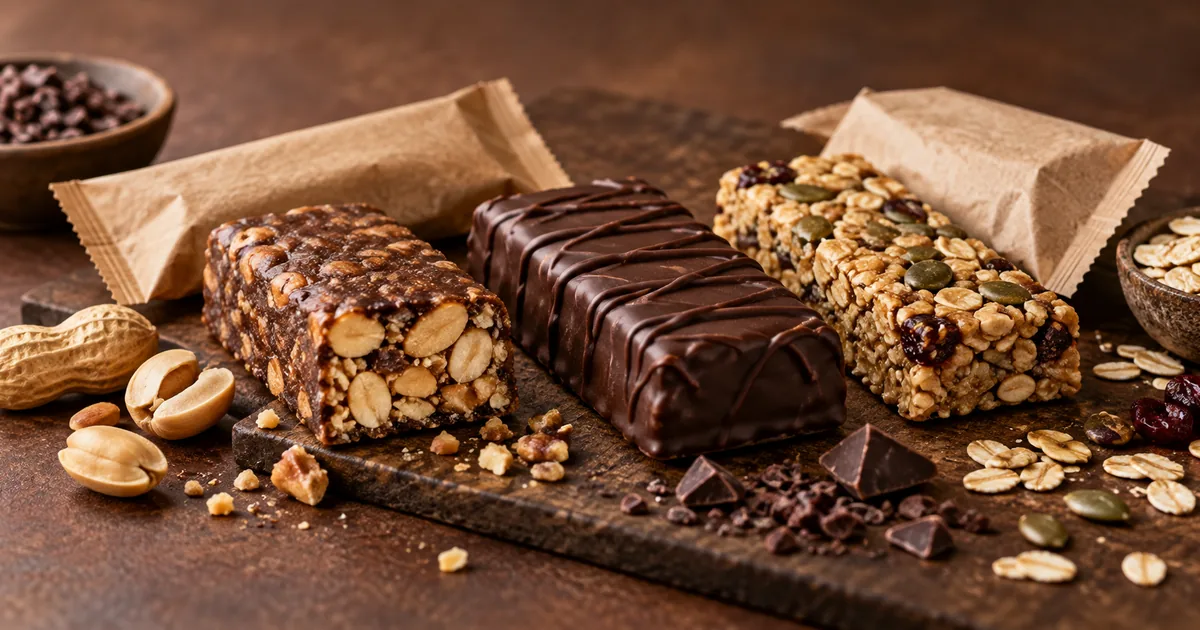
 Check your own packet
Check the range name, not just the large protein number. Two bars from the same maker can contain completely different protein sources.
- Scan the bar's exact barcode or photograph its ingredient list in VeganCheckr.
- Compare the returned recipe with your wrapper, including the coating and filling.
- Look for milk proteins, collagen or other flagged ingredients, and resolve unclear sources with the manufacturer.
VeganCheckr is available for iPhone and Android. Features and optional Premium access differ. Android photo recognition supports printed Latin-script labels. A result is guidance; unclear sources still need a manufacturer answer.
Check the range before the protein number
A large protein number on a wrapper does not identify where the protein came from. A bar can use soy or pea protein and still add milk chocolate, honey or collagen elsewhere in the recipe. A brand can also sell plant-based and animal-ingredient ranges at the same time.
That makes the full name unusually important in this aisle. The examples below are comparisons of published ingredient and suitability information, not a nutrition ranking, taste test or recommendation for how much protein you personally need.
Current UK and US products compared
We reviewed the named manufacturer sources on October 14, 2026. Match the actual flavour, range and country before applying a row to your packet.
| Exact product and market | Evidence to notice | Assessment |
|---|---|---|
| Misfits plant-based Cookie Dough, US | Explicit vegan description; the current panel uses soy, pea and fava-bean proteins | Manufacturer-confirmed vegan for this product |
| Misfits Stuffed Chocolate Frosting, US | Milk, whey, casein and collagen; the FAQ identifies bovine collagen | Not vegan or vegetarian |
| CLIF BUILDERS Chocolatey Peanut Butter Plant Based, US | Soy protein and vegetable glycerin in the recipe, with precautionary milk wording | Marketed as plant-based; no explicit vegan claim found on the checked page |
| CLIF BUILDERS Crispy Peanut Butter Chocolate Reduced Sugar, US | Whey protein concentrate from milk | Not vegan; a different recipe from the traditional bar |
| Grenade Chocolate Chip Salted Caramel, 60 g, UK | Milk-derived caseinate, whey and bovine collagen | Not vegan or vegetarian |
| GoMacro Peanut Butter Chocolate Chip MacroBar, US | Vegan designation; brown-rice/pea proteins and vegan chocolate chips | Manufacturer vegan confirmation; its collection also identifies certified-vegan bars |
Misfits sources: the plant-based Cookie Dough, Stuffed Chocolate Frosting and current FAQ. CLIF sources: traditional Chocolatey Peanut Butter and Crispy Peanut Butter Chocolate. See also the named Grenade bar, GoMacro product and manufacturer vegan collection.
Two range changes that make old lists unreliable
Misfits is no longer a useful shorthand for “every bar is vegan.” Its plant-based Cookie Dough product and Stuffed Chocolate Frosting product have different sources. The Stuffed example lists animal ingredients that a shopper might not expect if they remember only the brand's original positioning.
The BUILDERS examples show that even a shared range word is not enough. The traditional plant-based bar and the Crispy Reduced Sugar recipe need separate checks. A familiar peanut-butter/chocolate flavour does not make their protein sources identical.
When you save a product, keep the full name or barcode rather than only the logo. Recheck a new subrange, a different country or a redesigned wrapper. That is a small habit with more practical value than memorising a permanent list of supposedly vegan brands.
The ingredient words worth finding first
Whey, casein and caseinate are milk-derived proteins. A recipe containing them is different from a vegan recipe carrying a precautionary milk warning. In a compound coating, read the ingredients inside the brackets rather than stopping at “chocolate.”
Collagen needs its own check. Conventional bovine or marine collagen is not a plant protein, and a bar containing it does not become vegetarian because it has a sweet flavour or also uses nuts. The collagen guide separates animal collagen from products marketed as vegan builders.
Honey is another ingredient to look for, though this does not mean the named products above all contain it. For source-dependent ingredients such as an unspecified emulsifier, use the exact recipe's vegan confirmation or manufacturer evidence instead of automatically declaring it animal-derived.
Named soy or pea protein is useful information about that ingredient. It does not settle a milk coating, a collagen blend or a honey binder elsewhere in the bar. Read the complete recipe once before narrowing the question to a single additive.
The front can advertise plant protein while another part of the recipe supplies the animal ingredient.
Why may-contain milk is a different question
A precautionary statement concerns possible cross-contact; it is not the same as listing whey or milk chocolate as an ingredient. The traditional CLIF example illustrates why the two types of wording should not be collapsed into one verdict.
For a vegan decision, identify the deliberate recipe and current suitability evidence. For an allergy decision, use the current allergen advice and appropriate qualified guidance. Our milk-warning guide explains the distinction; a vegan app result cannot guarantee allergy safety.
Compare suitable bars by serving size
First establish which exact bars meet your dietary requirements. Then compare the nutrition information on the same basis, such as per bar versus per bar of a comparable size. A marketing number without its serving size can be misleading.
This article does not rank taste, health or value because no products were bought or tested for it. If you want context on ordinary food choices, the whole-food protein guide serves a different purpose from this packaged-bar check. Personal nutrition needs are best discussed with an appropriately qualified professional.
Peanut butter, oats or fruit can also have flavoured or fortified variations. The peanut-butter article shows how a short ingredient list differs from a honey or special-edition recipe without making a whole-brand claim.
A packet-check routine for the snack aisle
- Read the full range and flavour, including words such as Stuffed, Crispy or Reduced Sugar.
- Check milk proteins, collagen, honey and the coating ingredients.
- Find a current whole-product vegan statement where available.
- Keep precautionary allergen wording separate from deliberate ingredients.
- Match the barcode result to the wrapper and ask the maker about a genuine unresolved source.
If the maker's product page and packet disagree, keep a photo of the actual ingredients and ask which version applies. Do not let an old search snippet override the product in your hand.
Questions about vegan protein bars
Are all Misfits bars vegan?
No. The current plant-based and Stuffed examples have different recipes; the named Stuffed product contains milk proteins and bovine collagen.
Are all BUILDERS bars plant-based?
Do not assume so. The named Crispy Reduced Sugar bar contains whey, unlike the traditional plant-based example.
Does a vegan bar have to be soy-free or gluten-free?
No. Those are separate ingredient and allergen questions. Read the exact recipe and relevant claims rather than inferring them from vegan suitability.
Can an app help with a new flavour?
Yes, it can help identify a recorded product and flag ingredients, provided you compare the returned recipe with your current wrapper. Missing or changed data still needs checking.
Verification and editorial notes
The linked official sources were reviewed on . Examples cover the named products and markets; recipes and availability can change. This article uses published manufacturer evidence, not hands-on product testing. Vegan suitability and allergy safety are separate questions.
Research, writing and the source/readability reread were AI-assisted. No independent human review is claimed. Product names belong to their respective owners; no endorsement or affiliation is implied. See our editorial method and correction contact.
Check the label on your own product
VeganCheckr scans barcodes and ingredient labels, flags hidden animal ingredients and E-numbers, and shows you the evidence. Free to download on the App Store and Google Play. Optional Premium features vary by platform.

 Scan with your iPhone camera