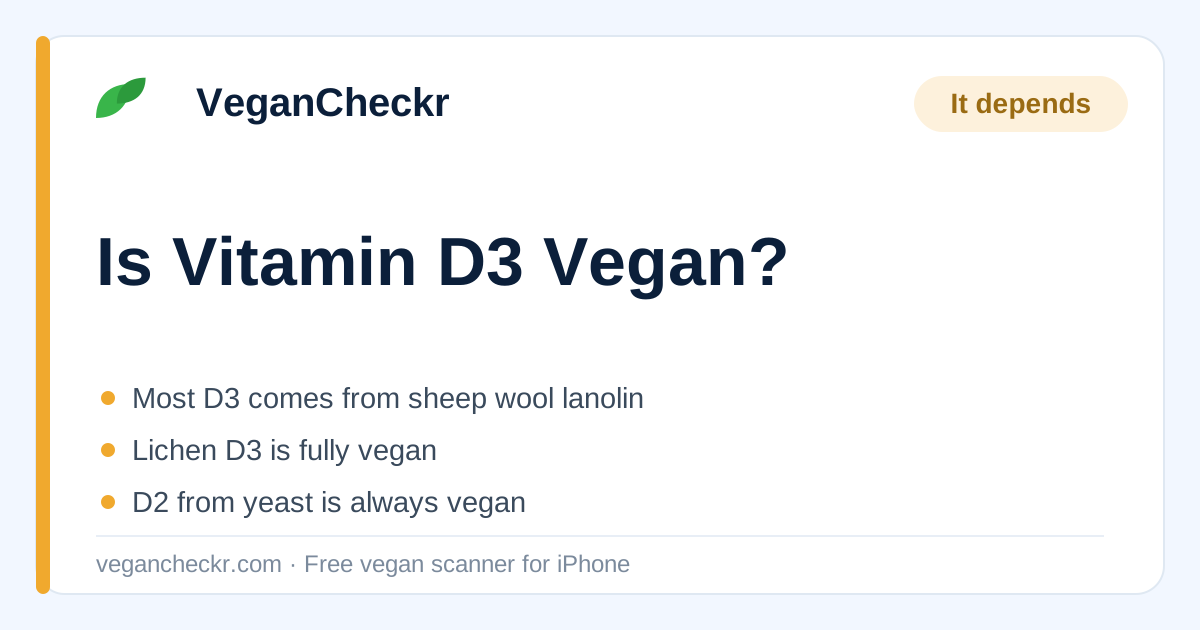
~ Depends on the source Most vitamin D3 is not vegan, because it is made from lanolin, the grease in sheep's wool. Lichen-derived D3 is fully vegan and chemically identical. Vitamin D2 is always vegan. On a label, look for "lichen", "vegan D3" or a vegan certification mark.
What vitamin D3 actually is
Vitamin D turns up on labels in two forms. D3 is cholecalciferol, the version your own skin makes under UVB light. D2 is ergocalciferol, which fungi and yeast produce under the same light. The two molecules differ only in a side chain, and the NIH Office of Dietary Supplements notes that most steps in their metabolism are identical and both forms are well absorbed in the gut.
So the vegan question has nothing to do with the molecule. Cholecalciferol from wool grease and cholecalciferol from lichen are the same compound, atom for atom. What differs is the raw material a manufacturer bought.
Lanolin D3: why most cholecalciferol is not vegan
The standard industrial route begins with lanolin, the waxy grease sheep secrete to weatherproof their fleece, recovered when raw wool is scoured after shearing. Lanolin is a rich commercial source of cholesterol, which gets purified and pushed through a chemical sequence into 7-dehydrocholesterol. Shine UV light on that, and you get vitamin D3.
The US food additive rule for the ingredient, 21 CFR 172.380, describes vitamin D3 as isolated from fish liver oils and also manufactured by ultraviolet irradiation of 7-dehydrocholesterol produced from cholesterol. Fish liver oil is the older route, still used in a few products, and no more vegan than wool.
So if a bottle says only "vitamin D3" or "cholecalciferol" with no source named, assume lanolin. Wool grease is cheap and already flowing out of textile processing, so it wins on cost.
Is lanolin vegetarian but not vegan?
Here people genuinely disagree. No sheep dies to produce lanolin, so plenty of vegetarians treat it as a byproduct and think no more about it. Veganism as normally defined excludes animal exploitation for any purpose, and wool means breeding sheep for fleece and slaughtering them when yields drop. The Vegan Society's vitamin D guidance treats lanolin D3 as unsuitable for vegans for exactly that reason.
It is the same line of argument as whether honey counts as vegan: the animal is not killed, but it is farmed. Our piece on plant-based versus vegan takes that distinction further.
Lichen D3: the vegan version of the same molecule
Lichens are a partnership between a fungus and an alga, and some species growing in harsh, high-UV places accumulate the D3 precursor. Reindeer lichen (Cladonia rangiferina) is the species suppliers name most often. Extract it, standardise it, and you have cholecalciferol with no animal input in the chain.
Lichen D3 reached the supplement market during the 2010s, and many mainstream brands now list a vegan version. Several lichen-derived D3 ingredients are registered with The Vegan Society, and any product carrying the Vegan Society Trademark or the Certified Vegan logo has had its source checked during certification. Extraction yields are low, which is part of why vegan D3 costs more.
Lichen is no longer the only animal-free route: cholecalciferol from microalgae is now sold in finished supplements, and some suppliers offer fermentation-derived D3. Lichen is still the version you meet most often, so an unfamiliar plant-source claim is worth confirming with the brand.
D2 vs D3: is "just take D2" good enough?
D2 is the simplest answer for vegans, because it is always vegan. It comes from ergosterol in yeast or mushrooms exposed to UV light. The FDA has authorised vitamin D2 mushroom powder made by UV-treating Agaricus bisporus, and UV-treated baker's yeast is approved in the EU as a novel food for fortifying bread.
It is a real answer, but an imperfect one. The NIH fact sheet is blunt about the gap: both forms are well absorbed, yet most evidence indicates that D3 raises serum 25-hydroxyvitamin D further and holds those higher levels for longer. That is why "just take D2" is weaker advice than it looks, and why lichen D3 matters.
| Form | Vegan? | Made from | Typical use | Label wording |
|---|---|---|---|---|
| Vitamin D2 (ergocalciferol) | Always | Ergosterol in UV-treated yeast or mushrooms | Fortified cereals, plant milks, bread, cheaper supplements | "Vitamin D2", "ergocalciferol" |
| Lanolin vitamin D3 | No | Cholesterol from sheep's wool grease | The default D3 in supplements and most fortification | "Vitamin D3", "cholecalciferol", usually with no source |
| Lichen vitamin D3 | Yes | Precursor extracted from lichen, mainly reindeer lichen | Vegan-certified supplements, some fortified plant milks | "Vegan D3", "lichen-derived", "plant-source cholecalciferol" |
Worth saying plainly: this page is about sourcing, not dosing. How much vitamin D you need depends on your latitude, skin, season and blood levels, so take that question to a doctor or dietitian rather than to an article. EFSA's 2023 opinion on the tolerable upper intake level set 100 micrograms a day as the adult ceiling, which is a boundary, not a recommendation.
How to spot vegan D3 on a label
Vegan D3 costs more, so brands that use it advertise it. The absence of a source claim is itself the signal.
| The label says | What it means |
|---|---|
| "Vitamin D3" or "cholecalciferol", no source given | Assume lanolin. Not vegan unless the brand confirms otherwise |
| "Vegan D3", "lichen-derived", "plant-source cholecalciferol" | Vegan |
| "Vitamin D2", "ergocalciferol" | Vegan, from UV-treated yeast or mushrooms |
| Vegan Society Trademark or Certified Vegan logo | Vegan, and the certifier has checked the whole formula |
| "Vitamin D3" plus a softgel with no capsule material named | Two things to check, not one. See the softgel trap below |
If a supplement says vitamin D3 and names no source, treat it as lanolin. Lichen D3 is the expensive option, so any brand paying for it puts the word lichen on the front of the pack.
Ambiguous ingredients are rarely settled by the ingredient's name, only by the source printed next to it. That is the core idea behind reading food labels as a vegan.
 Check a fortified product before it reaches the trolley
Vitamin D hides in cereals and plant milks more often than in supplements. Let the scanner read the list for you:
- Open VeganCheckr, tap Scan, and point your camera at the barcode of the cereal, plant milk or juice.
- Read the verdict with its evidence. Flagged ingredients are listed by name, so you can see at a glance whether the vitamin D line declares a source or leaves it open.
- Supplement tub with no barcode in the database? Use the ingredient label scan to photograph the printed panel instead.
The softgel trap: vegan D3 in a gelatin capsule
Here is the mistake that catches careful shoppers. A brand sources genuine lichen D3, prints "plant-source vitamin D3" on the front, then puts it inside a conventional softgel. Traditional softgel shells are gelatin, which comes from animal skin and bone. The vitamin is vegan; the capsule is not.
Check the "capsule" or "other ingredients" line for gelatin, bovine gelatin or fish gelatin. Vegan softgels exist and usually name their materials outright: tapioca or corn starch, vegetable glycerin, carrageenan or modified cellulose. Our guide to what gelatin is made from covers where else it hides, and it earns its place on the list of hidden animal ingredients for exactly this reason.
Fortified foods rarely tell you which vitamin D they used
Supplements are the easy case: buyers ask about sourcing and brands answer. Fortified groceries are murkier. Plant milks, orange juice, margarine and breakfast cereals carry added vitamin D, and the ingredient list is often allowed to say nothing more specific than “vitamin D”.
In the EU, added vitamins are not food additives at all. They fall under Regulation (EC) No 1925/2006 on the addition of vitamins and minerals to foods, which permits both cholecalciferol and ergocalciferol. That rule cares which chemical form went in, not which organism it came from, and US labelling works the same way.
So a carton of fortified oat milk can legally contain lanolin D3 and never mention it. Your options are the certification logo, the brand's website or an email to customer services. Plenty of plant milk brands do use D2 or lichen D3, and will say so if asked.
Does vitamin D3 have an E-number?
No. E-numbers are handed to food additives under Regulation (EC) No 1333/2008, and a vitamin added for nutrition is not an additive in EU law: it sits under the fortification rules instead. Some vitamins do hold a number when they earn it by doing a technical job, ascorbic acid (E300) as an antioxidant or riboflavin (E101) as a colour, but cholecalciferol has neither role nor number, so an additive table that assigns it one is not quoting the EU list. For the codes that genuinely do turn up on packs, see our rundown of E-numbers that are not vegan, or run a whole panel through the vegan ingredient checker guide.
Make the app remember gelatin so you don't have to
The capsule is the part people forget. Set it up once:
- Type "cholecalciferol", or paste a whole supplement panel, into ingredient analysis for an instant verdict on every line at once.
- Add gelatin to your personal avoidance alerts, so any softgel shell gets flagged even when the vitamin inside is plant-sourced.
- Save the brands that pass. Offline scan history keeps those verdicts on your phone for the next pharmacy aisle, without needing an account. See the privacy policy for platform-specific data practices.
Frequently asked questions
Is all vitamin D3 made from sheep's wool?
No, but most of it is. Lanolin from scoured sheep's wool is the cheapest and most abundant starting material, so it dominates supplements and food fortification. Lichen-derived D3 is the vegan alternative, and a small amount of D3 is still made from fish liver oil.
Is vitamin D2 as good as vitamin D3?
D2 works, but it is not identical in effect. The NIH Office of Dietary Supplements says both forms are well absorbed in the gut, while most evidence indicates that D3 raises blood levels of 25-hydroxyvitamin D further and keeps them up for longer. Since lichen D3 exists, vegans do not have to settle for D2 on ethical grounds alone.
Is lanolin vegan?
No. Lanolin is a grease produced by sheep and recovered when raw wool is washed. Sheep are not killed for it, so some people treat it as vegetarian, but it comes from farming animals for their fleece, which puts it outside the standard definition of vegan.
How do I know if my vitamin D supplement is vegan?
Look for the words lichen, lichen-derived, plant-source cholecalciferol or vegan D3 near the vitamin D line, or for a Vegan Society Trademark or Certified Vegan logo on the pack. Then check the capsule itself, because a plant-sourced D3 can still sit inside a gelatin softgel.
Is the vitamin D in fortified plant milk vegan?
Often, but not always, and the carton rarely tells you. Fortified drinks may use D2 from UV-treated yeast, lichen D3 or lanolin D3, and the ingredient list is usually allowed to say only vitamin D. Brands that pay for vegan certification are the reliable shortcut.
Check the label on your own product
VeganCheckr scans barcodes and ingredient labels, flags hidden animal ingredients and E-numbers, and shows you the evidence. Free to download on the App Store and Google Play. Optional Premium features vary by platform.

 Scan with your iPhone camera