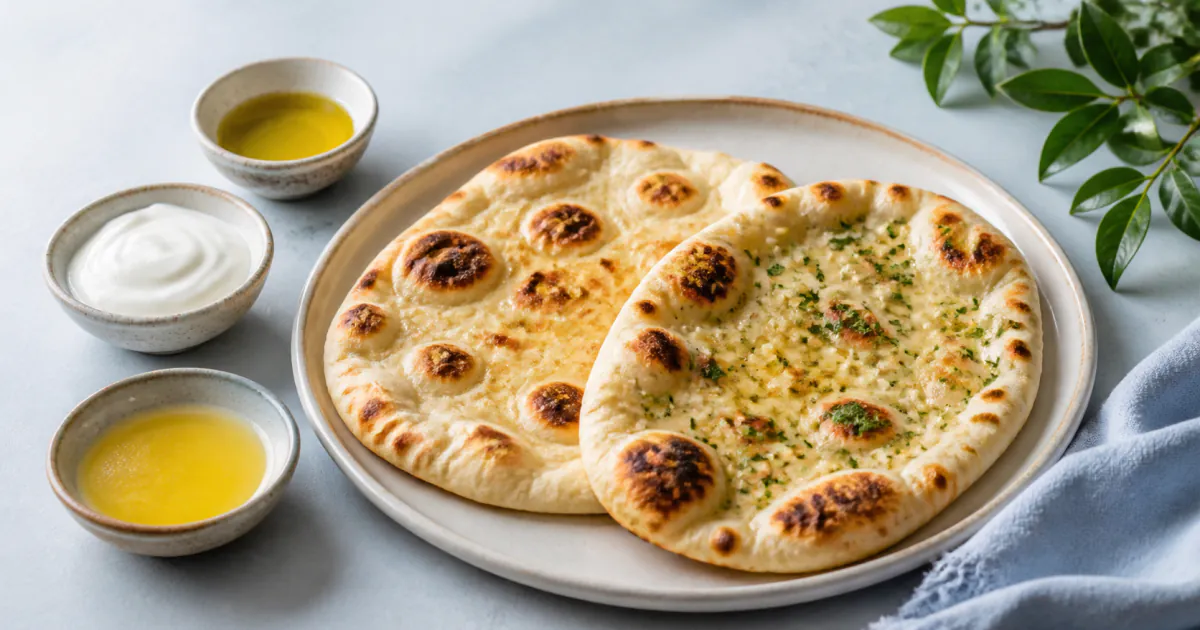
≈ Sometimes vegan Naan can use flour, water, yeast, salt and plant oil, but many recipes add yogurt, milk, ghee, butter or egg. Garlic does not settle the answer: garlic naan may still use dairy-rich dough or a butter finish. Choose a vegan label or ask about dough and brushing fat.
This article was verified against current US and UK product information on September 4, 2026. Restaurant recipes are rarely standardized, and packaged formulas differ by brand and country.
What makes one naan vegan and another non-vegan?
The core grain ingredients are straightforward: wheat flour, water, yeast or another leavening system, salt and sometimes sugar. Naan becomes uncertain when a cook enriches the dough for softness, tenderness, browning or flavor. The same restaurant can use a dairy-free dough but brush it with ghee after baking.
| Part of the naan | Vegan possibilities | Ingredients to avoid |
|---|---|---|
| Dough | Flour, water, yeast, plant yogurt, plant milk, vegetable oil | Milk, yogurt, buttermilk, whey, egg |
| Cooking fat | Rapeseed, sunflower, soybean or olive oil | Ghee, butter or other animal fat |
| Finish | Garlic oil, herb oil, vegan butter | Melted butter, ghee, dairy cream |
| Fillings | Garlic, coriander, vegetables, coconut, nuts | Paneer, cheese, minced meat, honey |
Ask what is in the dough and what is brushed on after baking. One answer does not cover both.
A current non-vegan example in the United States
Stonefire's current US Original Naan page shows why “plain” is not a vegan promise. Its ingredient list includes buttermilk, eggs and ghee, and the allergen statement declares wheat, milk and eggs. None of those animal ingredients is merely a facility trace; all are part of the formula.
The brand describes its family-size Original Naan in the same product family as using fresh buttermilk and ghee. That does not mean every US naan brand uses them. It demonstrates that a plain-looking packaged naan can contain three different animal-derived ingredients without cheese, meat or a creamy topping on the front.
Current packaged naan that is explicitly vegan
Plant-based commercial naan is easy to make and increasingly easy to find. The current Waitrose Plain Naan ingredient list uses wheat flour, water, rapeseed oil, vinegar, gluten, yeast, sugar, raising agents, fermented wheat flour, salt, kalonji and citric acid. The retailer explicitly marks it suitable for vegans.
A current UK listing for Clay Oven Bakery Garlic & Coriander Mini Naans lists flour, water, rapeseed oil, yeast, garlic, sugar, salt, vegetable oil, calcium propionate, sodium bicarbonate and coriander. It carries a Vegetarian Society Approved vegan claim. This proves garlic naan can be vegan when the base and finishing fat are plant-derived.
These products are examples, not permanent endorsements. Check the pack at purchase because recipes and certifications can change. A vegan mark is stronger than inferring the result from a short online list, especially when a pack contains enzymes, mono- and diglycerides or unspecified flavors.
 Find the hidden dairy in packaged naan
Scan the full ingredient panel with VeganCheckr to flag yogurt, milk, whey, ghee, butter and egg. Confirm source-dependent enzymes or emulsifiers with a vegan mark or the manufacturer.
Get VeganCheckr for iPhone or AndroidIs restaurant naan vegan?
Assume the answer is unknown until the restaurant checks its recipe. Some kitchens make one large batch of naan dough containing dairy or egg, then add toppings for plain, garlic and filled versions. Others use a simple dairy-free dough and vary only the finish.
Ask this exact question: “Does the naan dough contain milk, yogurt, buttermilk, ghee, butter or egg, and is it brushed with butter or ghee after cooking?” Mentioning the likely ingredients helps the person checking with the kitchen. “Can you make it vegan?” is useful only if the dough is already compatible; leaving off a butter brush cannot remove yogurt mixed into the batch.
If the regular naan dough contains dairy or egg, ask about roti or chapati. Those unleavened flatbreads are often made from whole-wheat flour and water, but they can still be brushed with ghee. Do not assume. A restaurant may also offer rice, poppadoms or another bread, each with its own cooking and cross-contact questions.
Is garlic naan vegan?
Garlic naan is not automatically vegan. Garlic and coriander are plant ingredients, but the name describes the topping rather than the complete dough. A typical restaurant version can contain yogurt, milk or egg in the dough and melted butter or ghee in the garlic finish.
Tesco's current garlic naan recipe illustrates the non-vegan pattern: it uses milk, plain yogurt, egg and ghee or melted butter. In contrast, the certified-vegan Clay Oven Bakery product uses garlic with plant oils and no dairy or egg. Both are legitimately called garlic naan.
At a restaurant, ask whether garlic can be mixed with oil and applied to a vegan-compatible dough. If the kitchen uses a pre-mixed garlic-butter blend, requesting “no butter” may not be possible. A dry or plain finish can still be enjoyable with curry, chutney or a verified dairy-free dip.
Plain, peshwari and keema naan
Plain naan
Plain only means no prominent flavored topping or filling. It can still contain milk, yogurt, ghee and egg, as the Stonefire example shows. Check it as carefully as a flavored version.
Peshwari naan
Peshwari-style fillings often contain coconut, dried fruit, sugar and nuts, all of which can be vegan. The dough and brush may still contain dairy or egg, and some restaurant fillings may use cream, milk or honey. Ask about both layers. People with nut allergies need a separate safety check.
Keema and paneer naan
Traditional keema is minced meat, while paneer is dairy cheese, so standard versions are not vegan. A restaurant could offer a clearly named plant-based mince or dairy-free cheese alternative, but that does not make the general menu name safe. Confirm the substitute, dough and finishing fat.
Reading a packaged naan label
- Look for an explicit vegan mark. This is the fastest way to resolve less familiar processing ingredients.
- Read the allergen statement. Milk or egg in a Contains line makes the answer clear, but their absence is not a full ingredient audit.
- Scan the dough ingredients. Check milk, yogurt, buttermilk, whey, casein, ghee, butter and egg.
- Read compound toppings. Garlic spread, herb butter and filling may have their own bracketed ingredients.
- Separate “contains” from “may contain.” A precautionary warning describes possible cross-contact rather than an intentional ingredient.
Enzymes and mono- or diglycerides may be source-dependent when no vegan certification is present. The general method in our vegan label-reading guide explains how to prioritize decisive ingredients before researching ambiguous ones. Our E471 guide covers the fat-source question for common emulsifiers.
Calcium propionate is a preservative commonly used in packaged bread and is not an animal ingredient by default. Sodium bicarbonate and standard phosphate raising agents are mineral or synthetic ingredients. Do not let unfamiliar chemistry distract you from the clearly declared yogurt, milk, ghee or egg that often determines the verdict.
How naan differs from ordinary bread
Our broader guide to whether bread is vegan covers loaves, buns and enriched doughs. Naan deserves its own check because enrichment and a post-bake fat brush are especially common. The bread may arrive glistening even when the menu simply says “plain naan.”
Conversely, the category is not inherently non-vegan. The vegan packaged examples above use normal bread-making ingredients and plant oil. A restaurant can do the same with water or plant yogurt and finish the bread with garlic oil or vegan butter.
Make vegan naan at home
Start with flour, yeast, warm water, salt and a little sugar and plant oil. For a softer enriched dough, use unsweetened plant yogurt or plant milk. Cook in a very hot dry pan, skillet or suitable oven surface, then brush with garlic and rapeseed, olive or melted vegan butter.
If adapting a recipe, start with an equal weight of thick unsweetened plant yogurt and adjust the flour or liquid because plant yogurts vary, or use a tested vegan recipe. Use plant milk for milk and neutral oil or vegan butter for ghee. Egg is often optional in naan dough; if a recipe depends on it for richness or structure, choose a tested vegan recipe instead of guessing at substitutions. Check that the vegan butter itself is free from milk solids.
The bottom line
Naan has no single vegan status. Many restaurant and packaged recipes contain yogurt, milk, buttermilk, ghee, butter or egg. Others use flour, water, yeast and plant oil and are explicitly labeled vegan. Garlic, plain or peshwari in the name does not settle the base dough or finishing fat.
For packaged naan, look for a current vegan mark and read the full panel. At restaurants, ask about both the dough and the brush. If either answer is unclear, choose a verified plant-based flatbread or rice rather than assuming that removing visible butter fixes the recipe.
Frequently asked questions
Does naan always contain yogurt?
No. Some recipes use yogurt or buttermilk for softness and flavor, while others use water, plant oil or plant yogurt. The bread's appearance cannot reveal which formula was used.
Is garlic naan vegan?
Sometimes. Garlic is vegan, but the dough may contain milk, yogurt, ghee or egg, and the topping may use butter. Certified-vegan garlic naan made with plant oil is also available.
Is ghee vegan?
No. Ghee is clarified butter made from milk fat. Use vegetable oil or a verified dairy-free butter alternative for a vegan finish.
Can a restaurant make naan vegan by leaving off butter?
Only if the dough is already vegan. Removing the finish does not remove yogurt, milk, ghee or egg mixed into a batch. Ask about the dough before requesting an oil or dry finish.
Is roti vegan?
Roti is often made from whole-wheat flour and water, so it is frequently vegan, but some kitchens add or brush it with ghee. Confirm the recipe and finish at the restaurant.
Check any product in seconds
VeganCheckr scans barcodes and ingredient labels, flags hidden animal ingredients and E-numbers, and shows you the evidence. Free to download on the App Store and Google Play. Optional Premium features vary by platform.

 Scan with your iPhone camera