Not vegan Traditional ghee is made from milk, cream or butter, so it is not vegan. Removing water and non-fat milk solids does not change the origin of the remaining fat. Products sold as vegetable ghee or vegan ghee can be plant-based alternatives; check their ingredients separately.
 Check your own packet
For a cooking-fat tin, ready meal or naan packet, check the complete recipe rather than the word “vegetarian” on the front.
- Scan the barcode in VeganCheckr, or use an ingredient photo or text check.
- Compare the returned ingredient list with your packet, looking for ghee, butter, milk fat and other dairy ingredients.
- If the packet says vegetable ghee but the ingredients are unclear, ask the maker for the source and vegan suitability.
VeganCheckr is available for iPhone and Android. Features and optional Premium access vary; Android photo recognition supports printed Latin-script labels. Results are guidance, not certification or an allergy-safety guarantee.
Why ghee is still dairy after clarification
The Codex description of ghee starts with milk, cream or butter and describes a process that removes almost all the water and non-fat solids. The fat left behind is still milk fat.
This is the distinction behind the vegan answer. A claim about reduced lactose does not mean the product was made without animals. Neither “clarified” nor a claim about the absence of a particular milk component changes the origin of its fat.
The Vegan Society's ingredient guidance excludes animal milk and products made from it. Dairy ghee falls into that group. This is a vegan-suitability decision, not a claim that every ghee has the same lactose content or the same implications for allergies.
Ghee, butter ghee and vegetable ghee: compare the labels
| Name on the pack | What to establish | Vegan answer |
|---|---|---|
| Ghee / clarified butter / butter ghee | Usually explicitly lists milk fat, dairy fat or butter | Traditional dairy product: not vegan |
| Cow or buffalo ghee | The milk species does not remove the dairy origin | Not vegan |
| Vegetable ghee | Read the declared oils and any added flavourings | Can be vegan; assess the exact product |
| Vegan ghee alternative | Check its vegan claim and full ingredients | A plant-based substitute, not traditional dairy ghee |
| A blend of vegetable oils and butter / milk fat | Check every fat in the blend, not only the first ingredient | Not vegan when dairy fat is included |
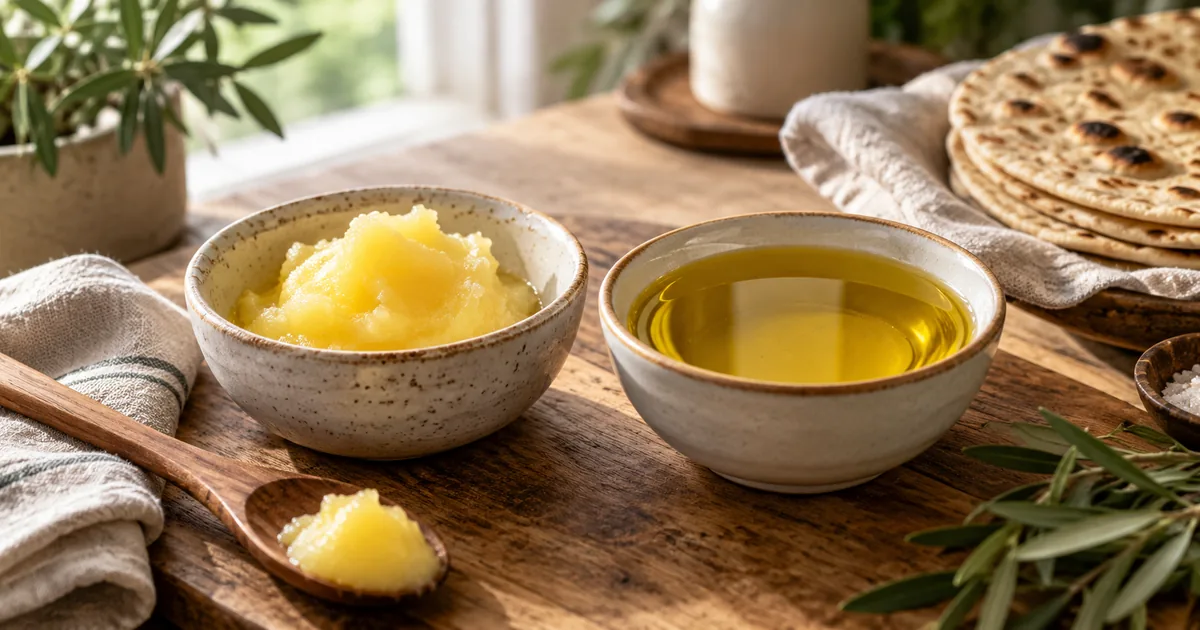
Do not decide by appearance. A golden colour, a grainy texture or a buttery smell is not a reliable ingredient declaration. This matters when a restaurant brings a small unlabelled bowl to the table.
Actual product examples checked October 1, 2026
These examples come from official manufacturer or brand-owner pages. They illustrate different categories; no product was bought, taste-tested or analysed for this guide.
India: Amul Pure Ghee
The Amul Pure Ghee 1 L listing declares dairy fat. That is enough to answer the vegan question: it is not vegan. “Pure” describes the ghee product; it does not mean dairy-free.
UK: Khanum Vegetable Ghee is not Khanum Butter Ghee
SOP International sells both lines under the Khanum name. Its 12.5 kg Vegetable Ghee page lists non-hydrogenated palm oil and says it contains no animal fats. That published recipe is plant-derived.
The large catering pack is the example verified here, not a claim about every size or every product with a similar tin. SOP's ghee range also includes butter ghee. Checking the full name prevents choosing the wrong line from the same brand.
US: a buttery plant oil rather than dairy ghee
Nutiva Organic Coconut Oil Buttery Flavor is described by its maker as vegan. Its base is coconut oil, and the manufacturer identifies plant sources for the flavour. It is an example of a buttery cooking alternative, not evidence that ordinary ghee is vegan.
Availability can vary. This guide does not promise that a particular pack is in stock near you, or that these alternatives taste or behave exactly like dairy ghee.
What to ask when ordering food
For a restaurant meal, checking the cooking fat is useful but not sufficient. A dish made with vegetable oil can still contain yoghurt, cream, paneer or another animal ingredient. Ask about the whole dish.
A practical request is: “Can this be made without ghee, butter, milk, yoghurt, cream or any other animal ingredients, using vegetable oil instead?” Then ask whether the base has already been prepared with dairy. Removing a finishing drizzle does not change a sauce that already contains it.
- Naan and flatbreads: ask about both the dough and the brushed-on fat. Our naan guide explains why leaving off butter may not settle the question.
- Dal, rice and vegetable dishes: ask which fat is used during cooking and whether ghee or butter is added at the end.
- Sweets: check the base as well as the cooking fat. Ask specifically about milk, milk powder and ghee instead of relying on “vegetarian.”
- Buffets and prepared sauces: ask staff to verify the existing recipe. If they cannot confirm it, treat the answer as unknown.
A scanner cannot inspect a restaurant's cooking process. It helps with a printed ingredient list or packaged product; the kitchen is the source for an unpackaged dish. For travelling, our vegan food travel guide covers planning around uncertain menus.
For naan, check the dough and the topping. For a curry, check the base and the finishing fat.
Choosing a substitute at home
Start with what the fat needs to do in your recipe. For a simple vegetable dish, a suitable plain plant oil may meet the need without buying a product labelled vegan ghee. For a buttery finish, choose a vegan-labelled alternative whose flavour and cooking instructions suit the dish.
Baking and sweets need more care because the recipe may depend on how the fat sets or how much water it contains. A tub spread is not automatically a one-for-one replacement for a cooking oil. Follow a recipe developed for the substitute or the manufacturer's instructions rather than relying on a blanket conversion.
Check the rest of the meal too. Swapping ghee does not fix yoghurt in a marinade or milk powder in a dessert mix. The guide to hidden animal ingredients can help with less obvious names.
Common ghee questions
Is ghee vegetarian?
Dairy ghee can fit a lacto-vegetarian diet, which includes dairy, but it does not fit a vegan diet. “Vegetarian” and “vegan” answer different questions. See our guide to dietary terms if the distinction is new to you.
Is organic or grass-fed ghee vegan?
No. If the product is made from animal milk, production or farming claims do not turn it into a plant-derived fat. Look for a genuinely non-animal alternative instead.
Can a lactose-free ghee be vegan?
A lactose claim concerns a milk sugar, not the origin of the fat. A product still made from milk is not vegan. Do not interpret lactose-related wording as a guarantee of milk-allergy safety.
Is vegetable ghee always suitable for vegans?
Check its ingredients and the maker's statement. A clearly declared plant-oil recipe may be suitable, as the Khanum example above illustrates. Do not extend that answer to an unclear blend or to a butter-ghee tin from the same brand.
Sources and review scope
The official sources linked above were checked on . Local packaging takes precedence over a mismatched online example. This guide is not personal medical or allergy advice.
AI-assisted research and writing, followed by an AI-assisted source and readability review. No hands-on product testing or independent human review is claimed. Our editorial methodology and contact details explain how to report a correction.
Check the label on your own product
VeganCheckr scans barcodes and ingredient labels, flags hidden animal ingredients and E-numbers, and shows you the evidence. Free to download on the App Store and Google Play. Optional Premium features vary by platform.

 Scan with your iPhone camera