Pectin itself is plant-derived Pectin, also called E440, is a plant-derived gelling ingredient commonly made from apple pomace or citrus peel. It is generally vegan. Read the full recipe because pectin can appear alongside gelatin, milk or other animal ingredients.
 Check your own packet
Two desserts can both use pectin while giving you different vegan answers. Compare the complete ingredient lists.
- Scan the sweet, jam or dessert barcode, or photograph its ingredients in VeganCheckr.
- Recognise pectin or E440, then check separately for gelatin, milk and glazes.
- Match the result to your exact packet and current maker page; do not carry one product's vegan claim across a whole brand.
VeganCheckr is available for iPhone and Android. Features and optional Premium access differ. Android photo recognition supports printed Latin-script labels. A result is guidance; unclear sources still need a manufacturer answer.
Where food pectin comes from
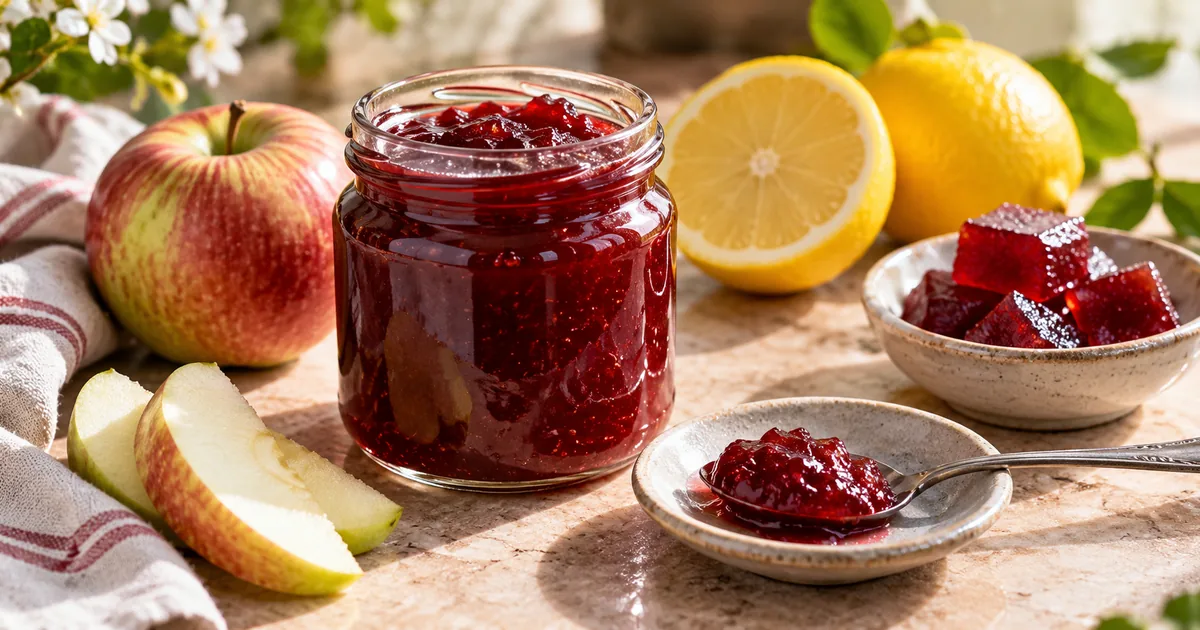
Pectin is a plant polysaccharide used to help foods gel, thicken or keep a useful texture. Food manufacturers commonly obtain it from apple pomace and citrus peel. The name can sound technical, but its usual raw materials are parts of fruit, not animal skin or bones.
The pectin producer Herbstreith & Fox describes those raw materials in its supplier statement about pectin production, version 15, valid from October 2020 and accessed October 14, 2026. The upload path does not make this a new 2026 certificate. It is evidence about the supplier's process and a GMO statement, not vegan certification of every food made with its pectin.
On an ingredient list, you may see pectin, fruit pectin or E440. A retailer may describe a sweet as “pectin-based.” Those terms help you identify the gelling ingredient; the remaining recipe still needs reading.
Pectin and gelatin are different ingredients
| Question | Pectin | Gelatin |
|---|---|---|
| Typical source | Plant material, often apple pomace or citrus peel | Animal collagen |
| Common label wording | Pectin, fruit pectin, E440 | Gelatin or gelatine, sometimes a named animal source |
| Typical uses | Jam, jelly, fruit preparations and some sweets | Some sweets, desserts, capsules and other foods |
| Ingredient-level vegan answer | Generally vegan | Not vegan or vegetarian |
| Does its presence settle the whole food? | No | Added animal gelatin makes that recipe unsuitable for a vegan diet |
Both ingredients can give a dessert structure, but that does not make them identical or interchangeable in a recipe. Different pectins work with different acidity, sugar and calcium conditions. This is a shopping guide, not a tested substitution formula.
If you are checking gummies, start with the gelatin reference and then inspect the rest of the sweet. “Contains pectin” is not the same claim as “contains no gelatin.” A manufacturer may use more than one texturising ingredient.
Three current UK examples from the same maker
Bonne Maman's official UK pages provide a particularly clear comparison. These named examples were reviewed on October 14, 2026; the packet remains important if you have another market, portion size or later recipe.
| Exact product | Published evidence | Useful conclusion |
|---|---|---|
| Strawberry Jelly, 2 × 90 g | Fruit pectin is listed and the manufacturer describes it as vegan-friendly | A current named pectin product with maker vegan confirmation |
| Strawberry Conserve, 370 g | Fruit pectin is listed; the page carries vegetarian wording | Read the complete recipe and the scope of the claim rather than calling the whole range certified vegan |
| Chocolate Mousse, 2 × 70 g | Fruit pectin appears alongside cream, milk and pork gelatine | Not vegan: pectin does not remove the animal ingredients |
The sources are the maker's Strawberry Jelly, Strawberry Conserve and Chocolate Mousse pages. The mousse is an important counterexample to an ingredient-only checker: a generally vegan gelling ingredient can sit inside a clearly non-vegan dessert.
What else to check in sweets and jam
For sweets, look beyond the setting agent. Glazes may include shellac or beeswax. A colour may be insect-derived carmine. A filling can contain milk, and a sweetener can include honey. The pectin answer leaves those questions open.
For jam or fruit spreads, identify the complete retail product. A straightforward fruit preserve is different from a fruit-and-cream dessert, a filled biscuit or a chocolate-coated jelly. The word “fruit” does not describe everything that has been added.
Also separate recipe ingredients from precautionary warnings. A product may have a vegan statement and a “may contain milk” warning because the two statements address different issues. Our milk-warning guide explains that distinction without offering an allergy-safety guarantee.
Check whether pectin is the only setting ingredient, then keep reading the recipe.
Why old vegan-sweet lists need checking
Recipes change, and a product that once used pectin may later use starch or a blend. A familiar packet can also have different ingredients in another country. Use the current manufacturer page and your own packet rather than repeating a gelling-agent claim from an old roundup.
This is why a useful label example includes a name, size, market and date. Our Haribo guide and Sour Patch Kids guide apply the same product-specific approach. Neither a brand name nor a gummy texture establishes a shared worldwide recipe.
A short routine at the shelf
- Find the exact product and country rather than a broad brand verdict.
- Locate pectin/E440 and any other gelling ingredients.
- Read the coating, filling, colour and glaze ingredients as well.
- Use current whole-product vegan confirmation when available.
- If a source remains unclear, ask the manufacturer with the barcode and ingredient photo.
A simple question helps: “Can you confirm whether this exact recipe is suitable for vegans, including the gelling ingredients and glaze?” That is more useful than asking whether pectin in general comes from animals.
Questions about pectin and vegan food
Does pectin contain pork?
Pectin's usual fruit source is unrelated to pork gelatin. However, a finished product can list both, as the mousse example shows.
Are all pectin gummies vegan?
No. Their other ingredients and the maker's production information still matter. Check the whole recipe, including the glaze.
Is a pectin dessert automatically dairy-free?
No. Pectin is also used in dairy foods. It does not tell you whether milk or cream was added.
Can I swap pectin for gelatin one-for-one?
Do not assume so. Their setting behaviour differs; use a recipe developed for the specific pectin instead of treating this ingredient guide as a baking test.
Verification and editorial notes
The linked official sources were reviewed on . Examples cover the named products and markets; recipes and availability can change. This article uses published manufacturer evidence, not hands-on product testing. Vegan suitability and allergy safety are separate questions.
Research, writing and the source/readability reread were AI-assisted. No independent human review is claimed. Product names belong to their respective owners; no endorsement or affiliation is implied. See our editorial method and correction contact.
Check the label on your own product
VeganCheckr scans barcodes and ingredient labels, flags hidden animal ingredients and E-numbers, and shows you the evidence. Free to download on the App Store and Google Play. Optional Premium features vary by platform.

 Scan with your iPhone camera