✗ Classic Nutella is not vegan The standard Nutella recipe contains skimmed milk powder in every official market version we checked: the United States, the United Kingdom and Ireland, and Australia and New Zealand. That dairy ingredient settles the question before palm oil, sugar or lecithin enter the discussion. The UK Nutella Plant-Based jar is a separate product: Ferrero’s UK page says it replaces milk with chickpeas and rice syrup and is certified vegan by the Vegetarian Society.
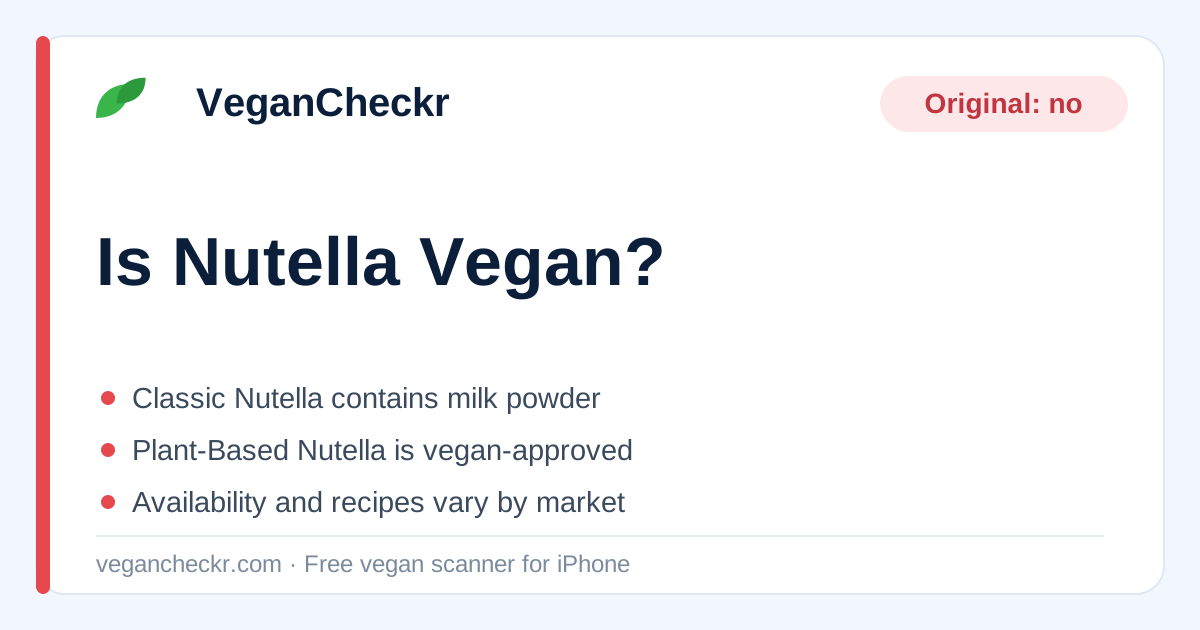
This verdict was checked against current official Nutella pages on August 30, 2026. It applies to the named products and markets on that date, not to an old jar, an import with a different label, or every Nutella-branded biscuit and snack. If the front only says “Nutella” and the ingredients include milk powder, it is the dairy recipe. If it says “Nutella Plant-Based,” verify the green-lid jar and its local label before buying.
The short answer by product
| Product checked | Vegan? | Deciding evidence, verified August 30, 2026 |
|---|---|---|
| Classic Nutella, US | No | Ferrero’s US milk FAQ confirms skim milk powder is part of the recipe. |
| Classic Nutella, UK and Ireland | No | The official jar page lists skimmed milk powder at 8.7%. |
| Classic Nutella, Australia and New Zealand | No | The official jar page lists skim milk powder among the seven ingredients. |
| Nutella Plant-Based, UK | Yes | No milk ingredient; the product is certified vegan by the Vegetarian Society. It carries a “may contain milk” factory warning. |
| Nutella & Go, standard version | No | The dip is classic Nutella and contains skimmed milk powder. |
| Nutella Biscuits, standard version | No | The official Australian recipe includes skim milk powder, lactose, whole milk powder and honey. |
What in classic Nutella is not vegan?
The decisive ingredient is skimmed milk powder. Ferrero’s official US milk FAQ answers the question directly: Nutella contains skimmed milk powder. The company explains that removing water from skimmed milk gives a dry ingredient suited to the spread’s low-moisture recipe and helps produce its creamy texture. Drying the milk does not change its origin; it remains dairy.
The country pages remove any doubt that this is merely a US formulation. The official UK and Ireland jar page lists sugar, palm oil, hazelnuts, skimmed milk powder, reduced-fat cocoa, soya lecithin and vanillin, and gives the milk powder share as 8.7%. The official Australia and New Zealand page likewise lists skim milk powder. The wording changes slightly; the animal source does not.
Milk powder can be easy to miss because it sits between familiar plant ingredients, and because hazelnut-cocoa spread sounds as though it should be dark chocolate in a jar. The same trap appears in chocolate bars: cocoa is a plant, but a finished product can still contain milk fat, whey or milk powder. Our guide to checking whether dark chocolate is vegan uses the same ingredient-first rule.
The cocoa and hazelnuts are vegan. The finished classic spread is not, because its creaminess is built partly with dairy milk powder.
The other six ingredients are not the reason for the “no”
Once milk appears, the verdict is already settled. Still, Nutella discussions often get diverted toward ingredients that deserve a more precise answer.
- Hazelnuts and cocoa are plants. Cocoa powder contains no dairy by definition; milk only enters when a manufacturer adds it separately.
- Palm oil comes from the fruit of oil palms, so it is vegan by origin. People may avoid it for environmental reasons, but that is a separate decision from whether an ingredient comes from an animal.
- Lecithin can come from different sources in the wider food industry. Nutella’s local labels identify soya, and Ferrero says its lecithin is mainly soy-derived and can alternatively come from sunflower. Both are plant sources. See our detailed explanation of E322 and soy lecithin.
- Vanillin is a flavouring used to standardise the vanilla note. It is not the same as castoreum, despite a persistent internet myth.
- Sugar is plant-derived, but some strict US vegans consider the possibility of bone-char filtration. That supply-chain question is covered in our complete guide to vegan sugar. It does not rescue or worsen classic Nutella’s clear milk-based verdict.
Ferrero’s official lecithin page is useful because it shows why a vague term should not be judged by name alone: the manufacturer identifies the actual source. The quickest way to audit other spreads is the same—read the source in parentheses, then check the allergen statement for milk.
Nutella Plant-Based changes the answer
Nutella Plant-Based is not a marketing nickname for the classic jar. It is a different formula. On the official UK Nutella Plant-Based page, Ferrero lists sugar, palm oil, hazelnuts, chickpeas, reduced-fat cocoa, powdered rice syrup, soya lecithin, salt and flavourings. Chickpeas and rice syrup replace the role filled by milk powder in the classic version.
More importantly, that official UK page states that the product is vegan-approved by the Vegetarian Society. That is stronger evidence than guessing from a short ingredient list: the exact UK formula has been submitted to a vegan certification programme. Availability still changes by retailer and market, so do not assume a shop selling classic Nutella also stocks the plant-based version.
What does “may contain milk” mean on the plant-based jar?
The plant-based label warns that it may contain milk because it is made in a factory that handles milk. Ferrero simultaneously identifies the product as certified vegan and says it is not suitable for people with a milk allergy. Those statements answer two different questions:
- Vegan ingredient question: milk is not intentionally used in the plant-based recipe, and the product is vegan-certified.
- Allergy question: accidental trace exposure is possible in a shared facility, so someone with a milk-protein allergy must follow the manufacturer’s warning.
A precautionary warning is not a hidden recipe ingredient. That distinction matters across supermarket food, and the checklist in how to read a food label as a vegan separates “contains” from “may contain” language. Ethical suitability and allergy safety overlap, but they are not interchangeable.
 Checking an imported jar?
Photograph the local ingredient panel with VeganCheckr. The label scan flags milk powder, whey, lactose and other animal-derived ingredients, while leaving the separate “may contain” warning visible for your own allergy decision.
Get VeganCheckr for iPhone or AndroidClassic jar, green lid or Nutella-branded snack?
The logo alone cannot provide a verdict. Ferrero now sells a family of products, and several add more animal ingredients than the classic spread.
Classic Nutella uses the familiar white lid in many markets and contains milk powder. Nutella Plant-Based is explicitly named “Plant-Based,” uses distinctive green branding, and has its own ingredient panel. A jar described by an online seller merely as “new Nutella” is not enough evidence; inspect the product photograph and label.
Nutella & Go combines standard spread with breadsticks. The official UK product page lists skimmed milk powder in the spread, so removing the breadsticks or checking their recipe does not change the dairy verdict.
Nutella Biscuits are even less ambiguous. The official Australian product page lists classic hazelnut spread plus lactose, whole milk powder and honey in the biscuit recipe. Other Nutella-branded croissants, ice creams, bakery snacks and frozen desserts can add butter, cream, eggs or whey. Treat every format as its own product rather than extending the plant-based jar’s certification across the range.
How to choose a vegan hazelnut spread
If Nutella Plant-Based is sold in your country, the certification and exact product name make it the simplest like-for-like choice. Otherwise, a different brand can work just as well. Look for a vegan mark, then confirm that the label contains hazelnuts, cocoa and plant oils without milk powder, whey, casein, lactose, butterfat or honey.
Do not stop at a front-label phrase such as “dairy-free style,” “dark,” or “plant-powered.” The legal ingredient panel is the useful part. A spread may omit obvious milk yet use an ambiguous flavour blend; our guide to natural flavours and animal sources explains when that term warrants a manufacturer question. For a long unfamiliar list, paste it into the vegan ingredient checker workflow instead of judging one word at a time.
Also check the exact market. An imported product can sit beside a domestic jar with nearly identical packaging, while a recipe update may reach one country months before another. The lot in your hand outranks a screenshot, an old blog post and even this dated comparison.
The bottom line
Classic Nutella is not vegan in the United States, the UK and Ireland, or Australia and New Zealand as verified on August 30, 2026. Each official recipe uses skimmed milk powder. It is not a borderline verdict and it is not caused by cocoa, palm oil or soya lecithin.
The UK Nutella Plant-Based jar is the exception: it replaces milk with chickpeas and rice syrup and carries Vegetarian Society vegan approval. Its shared-factory milk warning matters for allergy safety, but Ferrero still identifies the formula as certified vegan. Read the product name, confirm the local label, and never assume the certification covers Nutella Biscuits, Nutella & Go or another branded format.
Frequently asked questions
Does Nutella contain dairy?
Yes. The standard recipe contains skimmed milk powder. Ferrero confirms it on its US ingredient FAQ, and the current UK and Australian product pages list it directly.
Is Nutella vegetarian?
Classic Nutella contains dairy but no meat, fish or gelatine in the market recipes checked for this article, so its ingredient list fits a lacto-vegetarian diet. That does not make it vegan.
Is Nutella Plant-Based really vegan?
Ferrero says yes, and the UK product is certified vegan by the Vegetarian Society. It uses chickpeas and powdered rice syrup instead of milk. Check that the jar explicitly says “Plant-Based,” because the classic jar remains dairy-based.
Can someone with a milk allergy eat Nutella Plant-Based?
Ferrero says the plant-based product is not suitable for people allergic to milk because it is produced in a factory that handles milk. Vegan certification is not an allergy guarantee.
Is classic Nutella vegan in Italy?
No. The official Italian jar page lists skimmed milk powder at 8.7%. Nutella Plant-Based is a separate product, so the answer depends on the exact jar rather than the country or brand name alone.
Check any product in seconds
VeganCheckr scans barcodes and ingredient labels, flags hidden animal ingredients and E-numbers, and shows you the evidence. Free to download on the App Store and Google Play. Optional Premium features vary by platform.

 Scan with your iPhone camera