? Recipe varies Bubble tea can be vegan, but the name does not guarantee it. Plain brewed tea, sugar and tapioca pearls are often plant-based. Dairy milk, milk-derived caseinate in creamer, honey, egg pudding, cheese foam and gelatin-containing toppings can change the answer. Verify the base, sweetener and toppings separately.
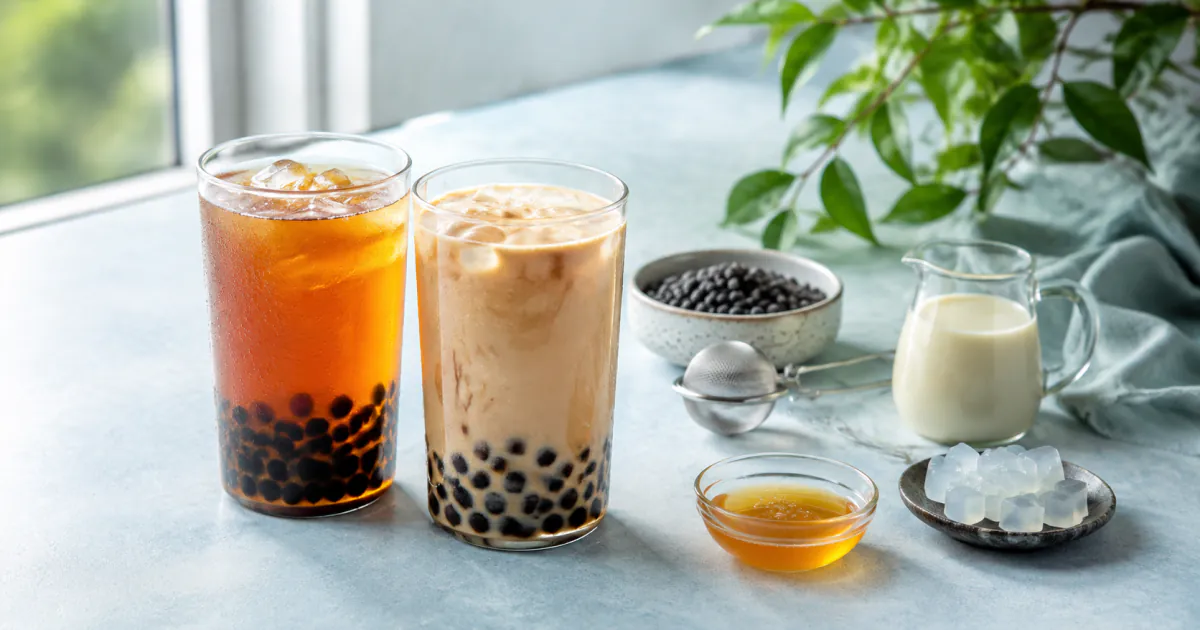
“Boba” can mean the pearls or the whole drink
People use boba for the chewy tapioca pearls and for the finished drink. That matters because the pearls may be suitable while the milk tea around them is not. A useful check divides the order into four parts: brewed base, milk or creamer, sweetener, and toppings.
This is not hypothetical. Bubble CiTea's current ingredient and allergen guide lists its tapioca pearls as tapioca starch, water, caramel color, thickeners, preservative and maple flavor, served with brown sugar syrup. On the same menu, several milk teas contain milk proteins, sodium caseinate, butter powder or fresh milk. One shop can therefore sell vegan-suitable pearls and non-vegan milk tea at the same counter.
A plant milk swap solves only the milk you can see. It does not automatically replace creamer powder, flavored powder, foam, pudding or honey.
Bubble tea components, checked one by one
| Component | Common examples | What to verify |
|---|---|---|
| Tea or fruit base | Black tea, jasmine tea, fruit tea | Milk powder, honey, yogurt or dairy flavor blends |
| Milk | Dairy, oat, soy, almond, coconut | That the selected plant milk replaces every dairy component |
| Creamer | Liquid or powdered whitener | Casein, caseinate, whey and milk protein |
| Sweetener | Cane sugar, fructose, brown sugar, honey | Honey, plus cane-sugar processing if that is part of your personal policy |
| Chewy pearls | Tapioca starch pearls | Cooking syrup, honey and supplier recipe |
| Jellies and popping boba | Nata de coco, agar or alginate spheres | Gelatin, dairy flavoring and cross-contact notes |
| Creamy toppings | Pudding, milk cap, cheese foam, cream foam | Milk, cream, cheese, whey, caseinate, egg or gelatin |
Are tapioca pearls vegan?
Basic tapioca pearls are generally plant-based. Tapioca starch comes from cassava, and a simple commercial recipe combines it with water, color and sugar syrup. The Bubble CiTea guide is a useful real-world example: its June 2026 pearl declaration uses tapioca starch and brown sugar syrup and lists sulphites, but no milk or egg ingredient.
That example is not a rule for every store. Some menus offer “honey boba,” soak pearls in honey, or use a premix with a different formula. Honey is not vegan, as our guide to honey explains. Ask what the cooked pearls are sweetened with, not only what the dry pearl contains.
Black pearls are not automatically non-vegan. Their dark color often comes from caramel color or brown sugar. Color is still something to check on a packaged mix, but you should not infer an animal ingredient from appearance alone.
Why “non-dairy creamer” needs a closer look
A plant oil-based powder can still contain a milk protein. The current Bubble CiTea document lists a creamer made with glucose syrup and palm kernel oil plus milk proteins. It also lists flavored powders containing sodium caseinate identified as milk. That is a direct reason to ask about the powder even after requesting oat or soy milk.
Sodium caseinate is made from casein, a milk protein, so it is not vegan. FDA's current food-allergen labeling guidance uses sodium caseinate as an example of an ingredient whose source should be declared as milk. “Lactose-free” does not rescue it, because a product can contain a milk protein without containing meaningful lactose.
A dependable question is: “Does the drink use any dairy milk, whey, casein, caseinate or milk powder, including in the creamer and flavor powder?” If staff only swaps the fresh milk, ask whether the original recipe also contains a powdered whitener.
Fruit tea is often the easiest route, not a guarantee
A made-to-order fruit tea without foam or dairy powder is often simpler to verify than milk tea. Still, fruit syrups and powders can carry milk warnings or contain a creamer. Bubble CiTea's guide, for example, gives different formulations and precautionary statements across its fruit flavors. Choose the exact drink only after checking its current entry, then verify the topping separately. “Fruit” describes the flavor family, not a certified vegan recipe.
Toppings that most often change the answer
Pudding and custard
Pudding toppings often use egg, milk, custard powder or gelatin. A shop may also offer plant-based pudding, so the name alone does not settle it. Request the current allergen or ingredient sheet for that exact topping.
Cheese foam, milk cap and cream
These names normally signal dairy unless the menu explicitly says a vegan alternative is used. Plant milk in the cup does not replace a dairy foam added at the end. Whipped toppings can also contain milk proteins or an ambiguous emulsifier, so verify the complete formula.
Fruit jelly, nata de coco and popping boba
Many are made with plant- or seaweed-derived gelling agents. Bubble CiTea's disclosed popping bubbles use sodium alginate, and its nata de coco toppings use coconut gel. Other suppliers can use gelatin or dairy-containing flavors. Treat the shop's current sheet, not the topping category, as the evidence.
If you are learning unfamiliar additive names, our guide to hidden animal ingredients and the E-number reference help separate obvious problems from ingredients that need a source check.
A reliable vegan bubble tea order
- Choose a base: plain black, green, oolong or fruit tea with no dairy or yogurt blend.
- Choose milk deliberately: ask for a plant milk and confirm there is no separate dairy creamer or powder.
- Choose the sweetener: request a verified plain sugar syrup instead of honey. Strict US shoppers may also check the refiner or choose beet or organic sugar, as explained in our sugar guide.
- Verify pearls: ask whether tapioca is cooked or coated in honey.
- Add only checked toppings: avoid unverified pudding, cheese foam, milk cap and jelly.
A short order could be: “Jasmine fruit tea with tapioca, no dairy, caseinate, honey, pudding or foam. Could you check the ingredient sheet for the pearls and sugar syrup?” Recipes change across countries, franchises and suppliers, so a social-media answer about another branch is weak evidence.
If the shop cannot produce ingredients, the lowest-uncertainty option is freshly brewed tea with a plainly identified sugar syrup and no topping. That may be less exciting than a fully loaded cup, but it avoids guessing about powders and premade jellies. You can return to a more elaborate order when the business can verify the recipe.
 Decode a packaged boba mix
Scan or paste the complete ingredient list into VeganCheckr on iPhone to flag casein, whey, gelatin, honey and uncertain additives. For a made-to-order drink, use the shop's current allergen sheet and speak to staff because a scanner cannot see an unpublished recipe.
Get VeganCheckr for iPhone or AndroidVegan preference is not the same as allergy safety
A vegan order can still carry traces of milk or egg from shared scoops, shakers, blenders and preparation surfaces. Some vegans accept precautionary “may contain” statements because they concern accidental cross-contact rather than a deliberate ingredient. A person with an allergy needs a separate safety decision.
The UK Food Standards Agency's allergen guidance says food businesses must provide allergen information for non-prepacked food and manage cross-contamination. Current GOV.UK allergen-labelling guidance also warns that a vegan label does not guarantee allergen-free food. Boba Guys likewise states in its current allergen notice that shared equipment means it cannot guarantee products are allergen-free.
If milk or egg could cause a reaction, tell staff it is an allergy, request the written allergen information, discuss shared equipment and follow your clinician's advice. Do not rely on a vegan app, a green menu icon or this guide as allergy clearance.
Frequently asked questions
Is milk tea vegan?
Standard milk tea is often made with dairy milk or a creamer containing milk protein. It can be vegan when the shop uses a verified plant milk or plant creamer and no other dairy powder, foam or topping.
Is boba itself vegan?
Plain tapioca pearls are usually plant-based, but preparation varies. Check whether the shop cooks or coats them in honey and whether a flavored pearl mix adds any animal-derived ingredient.
Is taro bubble tea vegan?
Not automatically. Taro root is a plant, but taro drinks may use fresh milk, dairy creamer or milk-containing flavor powder. Verify the powder and the milk component separately.
Are popping boba and fruit jelly vegan?
Many formulas use alginate, agar or nata de coco and can be vegan. Others may contain gelatin or dairy flavoring. Ask for the ingredient list for the exact topping and supplier.
Can bubble tea marked vegan be safe for a milk allergy?
Not necessarily. Vegan describes intentional ingredients, while shared equipment can create cross-contact. Ask the shop about its allergen process and follow medical guidance for your allergy.
Check any product in seconds
VeganCheckr scans barcodes and ingredient labels, flags hidden animal ingredients and E-numbers, and shows you the evidence. Free to download on the App Store and Google Play. Optional Premium features vary by platform.

 Scan with your iPhone camera