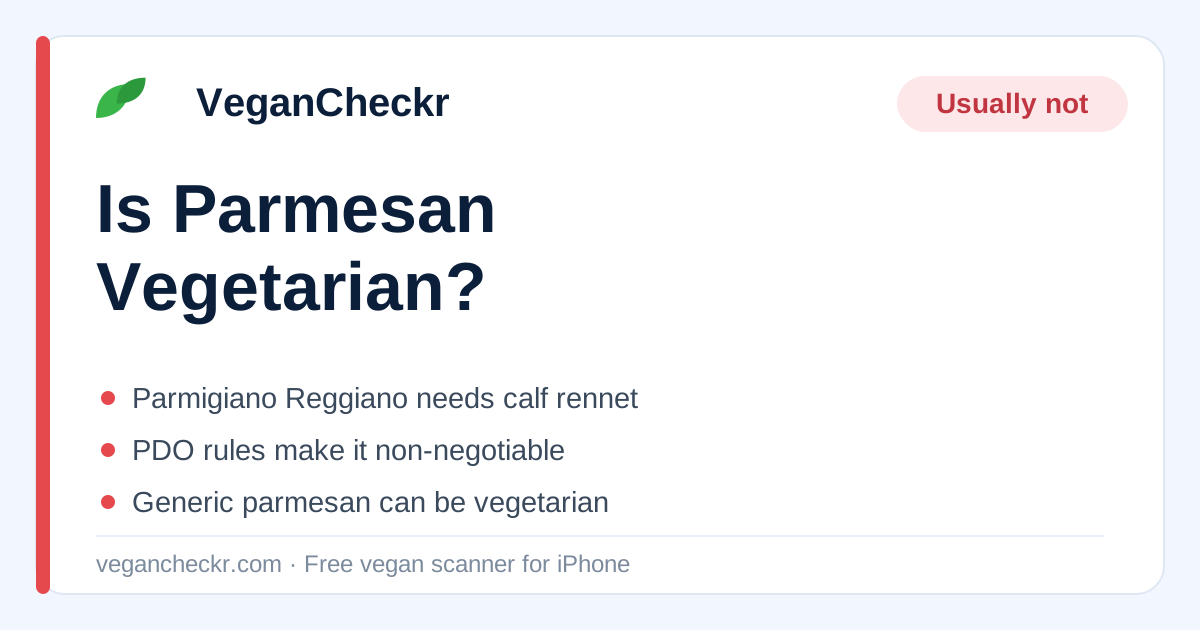
✗ Not vegetarian Genuine Parmigiano Reggiano is not vegetarian, and never can be. Its PDO specification requires calf rennet, an enzyme taken from the stomach of a young calf. Generic parmesan sold outside the EU may use microbial rennet instead, so it varies by brand. No version is vegan, since all of them are dairy.
What rennet is, and why it fails a vegetarian diet
Rennet is the enzyme preparation cheesemakers use to turn liquid milk into curd. Its active component is chymosin, and the traditional source is the abomasum, the fourth stomach compartment of an unweaned calf. Getting it requires slaughtering the calf.
That single fact is the whole problem. Milk itself involves no slaughter, which is why cheese sits comfortably inside a vegetarian diet in principle. Animal rennet pulls a slaughterhouse by-product back into the recipe, and most people grating parmesan have no idea, because nothing on the wedge mentions a calf.
Lamb and kid rennet work identically and are traditional in sheep's and goat's milk cheeses. Same enzyme family, same objection. For the full list of affected cheeses, see our guide to whether rennet is vegetarian.
Why real Parmigiano Reggiano can never be vegetarian
Parmigiano Reggiano is a PDO cheese, short for Protected Designation of Origin. A PDO is not a marketing badge. It is a legal specification: to carry the name, a wheel must be made in a defined area, to a defined recipe, and be inspected against that recipe. The official Parmigiano Reggiano production specification says coagulation must be "obtained exclusively by the use of calf rennet". Beyond that the recipe is raw cow's milk, the natural whey starter cultured from the previous day's whey, and brine salt. Additives are banned outright.
So vegetarian Parmigiano Reggiano does not exist. A producer who swapped in microbial rennet would still make an excellent hard cheese, but would lose the right to the name. That is the certified rule rather than habit, which is why no vegetarian-labelled wheel has appeared.
The word parmesan gives no escape route inside Europe either. In Commission v Germany (Case C-132/05, judgment of 26 February 2008) the Court of Justice held that "Parmesan" is an evocation of the Parmigiano Reggiano PDO and therefore covered by its protection. The action against Germany itself failed on a separate enforcement point, but the finding on the name stands: inside the EU, parmesan belongs to the genuine article. Vegetarian hard cheeses in the same style are sold there under names like "Italian hard cheese" precisely because they are not allowed to borrow the name.
Grana Padano, Pecorino Romano and Gorgonzola follow the same logic
The Grana Padano specification also calls for calf rennet, after the natural whey starter. Pecorino Romano uses lamb rennet paste from animals raised inside the production zone. Gorgonzola adds calf rennet to pasteurised milk alongside the Penicillium culture. Three PDO cheeses, three animal coagulants, all fixed by rule rather than preference.
Grana Padano carries one extra quirk. Its specification permits lysozyme (E1105), a preservative extracted from egg white, in every version except Trentingrana, and it must be declared with an egg allergen warning. Vegetarians have no issue with egg, but it is one more reason the cheese is nowhere near vegan.
| Cheese | Vegetarian? | Vegan? | Coagulant | Protected name? |
|---|---|---|---|---|
| Parmigiano Reggiano | No | No | Calf rennet, required by the specification | Yes, EU PDO |
| Grana Padano | No | No | Calf rennet, required (plus egg lysozyme, except Trentingrana) | Yes, EU PDO |
| Pecorino Romano | No | No | Lamb rennet paste, required | Yes, EU PDO |
| Gorgonzola | No | No | Calf rennet, required | Yes, EU PDO |
| Manchego | Varies by producer | No | Natural rennet or other authorised coagulating enzymes, so it genuinely varies | Yes, EU PDO |
| Generic parmesan (US, Australia, elsewhere) | Varies by brand | No | Any suitable milk-clotting enzyme; often microbial or FPC | No |
| Hard cheese labelled suitable for vegetarians | Yes | No | Microbial rennet or FPC | No |
If the label says Parmigiano Reggiano, Grana Padano or Pecorino Romano, the rennet question is already answered. Animal rennet is written into the rules those cheeses are certified against, so there is no vegetarian version to hunt for.
 Spot animal rennet before it reaches the trolley
Cheese labels bury the coagulant near the end of the list, if they name it at all. The scanner reads it for you:
- Open VeganCheckr, tap Scan and point your camera at the barcode on the wedge or the grated tub.
- Deli-counter piece with no barcode? Use the ingredient label scan to photograph the printed list instead.
- Read the verdict with its evidence. VeganCheckr has dedicated animal rennet detection and names the traditional cheeses that always contain it, including Parmigiano Reggiano, Grana Padano, Pecorino Romano and Gorgonzola.
The four kinds of coagulant, and which ones vegetarians can eat
Every cheese is set with one of four things. Knowing them turns a vague worry into a quick label check.
| Coagulant | Vegetarian? | What it actually is | Where you meet it |
|---|---|---|---|
| Animal rennet | No | Chymosin and pepsin from the abomasum of an unweaned calf, lamb or kid | PDO Italian hard cheeses and many traditional European cheeses |
| Microbial (fungal) rennet | Yes | Enzymes from fungi such as Rhizomucor miehei, grown by fermentation | Most supermarket cheddar and mozzarella marked vegetarian |
| Fermentation-produced chymosin (FPC) | Yes | The calf chymosin gene copied into a yeast or mould, which then brews the enzyme; no animal tissue in the product | The workhorse of industrial cheesemaking, especially in North America |
| Plant coagulant | Yes | Aspartic proteases from cardoon or thistle flowers (Cynara cardunculus), also fig latex and nettle | Traditional Portuguese and Spanish sheep's milk cheeses |
FPC is the one that trips people up. The gene originally came from a calf, but the enzyme is brewed by microbes and the finished coagulant contains no animal tissue, which is why FPC cheeses are sold as suitable for vegetarians. It is now the default in industrial cheesemaking: commonly cited trade estimates put it at 80 to 90 percent of the cheese made in the United States, though no producer publishes an audited figure.
In the US, parmesan is a generic name, so the answer varies
American labelling law treats parmesan as a cheese type, not a place. The FDA standard of identity for parmesan and reggiano cheese (21 CFR 133.165) sets a minimum cure of ten months and allows "sufficient rennet, or other safe and suitable milk-clotting enzyme". It then adds the line that makes this whole question awkward, permitting that "enzymes of animal, plant, or microbial origin may be declared as 'enzymes'".
Read that twice. A US parmesan can be entirely vegetarian and its ingredient list may still say nothing more useful than "enzymes". Two tubs on the same shelf can differ, and neither is obliged to say so.
The practical rule outside Europe: ignore the word parmesan and look for an explicit "microbial enzymes" or "vegetarian rennet" line, or a vegetarian certification mark. With neither, ask the brand or assume animal rennet. Large US dairies mostly use microbial or fermentation-produced coagulants, but "mostly" is not a label claim, which is the reflex reading food labels as a vegan is meant to build.
The pesto, pasta and restaurant traps
Parmesan rarely arrives as a wedge you had a chance to inspect. Classic pesto alla genovese is built on Parmigiano Reggiano and often Pecorino too, which is why almost every jarred pesto in a European supermarket fails a vegetarian check. Our breakdown of whether pesto is vegan covers the alternatives.
Fresh filled pasta is the other big one, since tortellini and ravioli fillings lean hard on grated hard cheese, and dried pasta brings its own egg question. Caesar dressing, risotto finished with parmesan, aubergine parmigiana and the free grating a waiter offers over your plate all belong on the same list, next to gelatin and carmine on our register of hidden animal ingredients.
What to buy instead
The substitutes have improved enormously, and one of them costs almost nothing.
- Vegetarian hard cheese. Aged Italian-style hard cheese made with microbial rennet, usually sold as "Italian hard cheese" because the parmesan name is off limits. It grates and melts the same way.
- Nutritional yeast. The cheapest option, deeply savoury, excellent on pasta and popcorn. Not a texture match, but the flavour heads in the right direction.
- Vegan parmesan alternatives. Cashew and nutritional yeast blends, shelf-stable in most health aisles, or blitzed at home in two minutes.
- Aged plant-based wedges. Fermented nut cheeses now age properly and hold up under a grater.
Check pesto, sauces and ready meals in one pass
Rennet hides in products where cheese is only a sub-ingredient. Two features handle that:
- Paste a suspect ingredient list into ingredient analysis to see whether a hard cheese or rennet is buried in it.
- Add rennet to your personal avoidance alerts, so anything containing it gets flagged automatically from then on.
- Save the brands that pass, and when one fails, check the suggested alternatives in the same category.
Is parmesan vegan? No, and no version of it is
Every cheese here is made from milk, so the vegan answer is settled before rennet enters the conversation. The vegetarian question is the interesting one, and it explains why "vegetarian Italian hard cheese" on a shelf is still not vegan.
That distinction matters most when explaining your diet to someone else, which is part of what separates plant-based eating from veganism. The same source-first habit works on any ambiguous ingredient, and our guide to checking whether food is vegan is the place to start.
Frequently asked questions
Is Parmigiano Reggiano vegetarian?
No. The Parmigiano Reggiano PDO specification states that coagulation is obtained exclusively with calf rennet, alongside raw cow's milk, a natural whey starter and brine salt. Because animal rennet is written into the rules the cheese is certified against, no wheel carrying that name can be vegetarian.
Is all parmesan made with animal rennet?
No. Inside the EU the name is reserved for Parmigiano Reggiano, which always uses calf rennet. Outside the EU, parmesan is a generic cheese type, and many producers use microbial rennet or fermentation-produced chymosin instead, so the answer varies by brand.
What is a vegetarian substitute for parmesan?
Look for a hard cheese sold as Italian hard cheese or labelled suitable for vegetarians, which is made with microbial rennet. Nutritional yeast and cashew-based vegan parmesan alternatives also work well on pasta, and both are vegan as well as vegetarian.
Does Pecorino Romano contain animal rennet?
Yes. The Pecorino Romano PDO specification requires lamb rennet paste from animals raised in the production area, so it is not vegetarian. Grana Padano and Gorgonzola require calf rennet under their own specifications.
How can I tell if a cheese uses animal rennet?
Read the ingredient list for the coagulant. Wording such as microbial rennet or vegetarian rennet, or a vegetarian certification mark, means no animal rennet was used. A bare rennet or enzymes is ambiguous, especially in the US, where the FDA lets enzymes of animal, plant or microbial origin all be declared simply as enzymes.
Check the label on your own product
VeganCheckr scans barcodes and ingredient labels, flags hidden animal ingredients and E-numbers, and shows you the evidence. Free to download on the App Store and Google Play. Optional Premium features vary by platform.

 Scan with your iPhone camera