? Check the dashi Miso soup can be vegan, but it is not vegan by default. Plain miso paste is usually plant-based. Traditional dashi often contains bonito or dried sardines, while kombu- or shiitake-only stock is vegan. Check instant packets and restaurant broth rather than judging by the visible toppings.
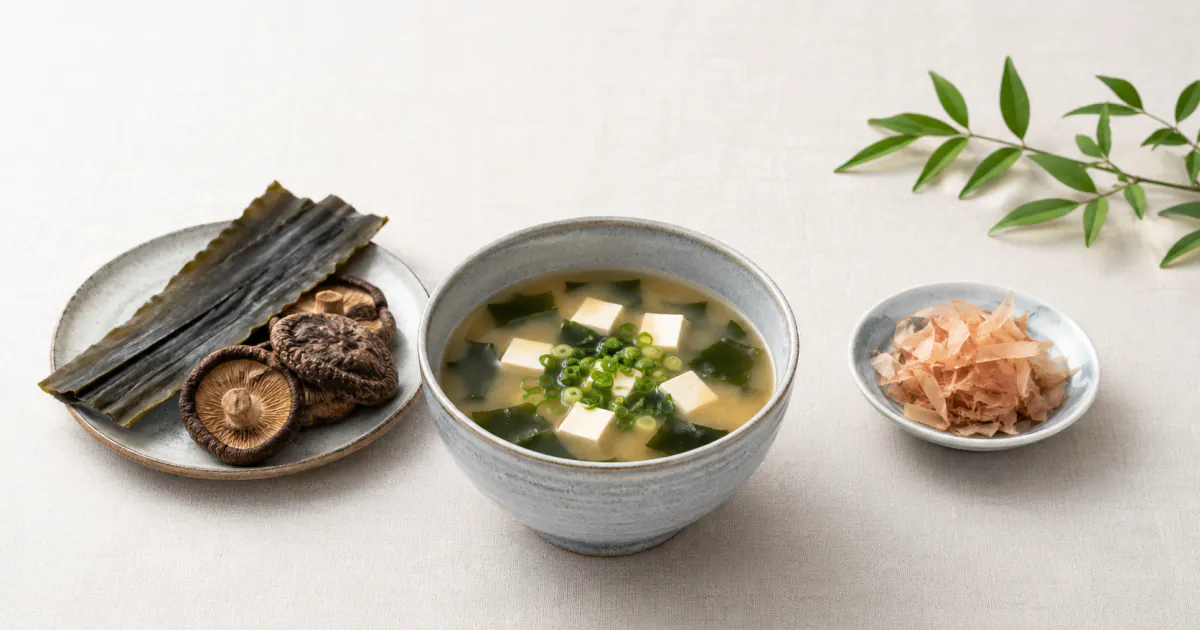
The short answer depends on two separate ingredients
Miso soup is built from miso and dashi. Treating them as one ingredient is the source of most confusion. Kikkoman's official overview of miso soup describes the dish as miso mixed into dashi and notes that both parts vary. A vegan verdict therefore needs two checks.
The first is the paste. Kikkoman's miso glossary describes conventional miso as soybeans fermented with salt and koji, with the koji grown on rice, barley or soybeans. Those base ingredients are not animal-derived. A seasoned paste or instant mix can add dashi, so the front label alone is not enough.
The second is the stock. Japan's Ministry of Agriculture, Forestry and Fisheries publishes a basic miso soup recipe that uses bonito soup stock. Its separate dashi method combines kombu with dried bonito flakes. A bowl containing only tofu, wakame and spring onion can still be non-vegan because the fish was strained out before serving.
Do not ask only what is floating in the bowl. Ask what the dashi was made from.
Which miso soup ingredients are vegan?
| Ingredient | What it contributes | Vegan status |
|---|---|---|
| Plain miso paste | Salt, fermented soybean flavor and body | Usually vegan; check seasoned varieties |
| Kombu dashi | Clean, savory seaweed stock | Vegan |
| Shiitake dashi | Earthy stock from dried mushrooms | Vegan |
| Katsuobushi or bonito | Smoked, dried fish stock | Not vegan |
| Niboshi or iriko | Stock from dried small fish, often sardines or anchovies | Not vegan |
| Tofu, wakame, scallion | Common additions | Vegan by themselves |
| Clams, pork or fish cakes | Regional or household additions | Not vegan |
Dashi words to recognize
Katsuobushi means dried bonito flakes. Niboshi and iriko commonly refer to dried small fish used for stock. Kikkoman's current dashi guide lists stock made from kombu and bonito, bonito alone, dried sardines, kombu alone, and shiitake. The generic word dashi does not identify which one is in your bowl.
Kombu dashi can be as simple as kelp and water. Shiitake dashi is made from dried mushrooms. Both are suitable plant-based choices when nothing animal-derived is added later. Kikkoman even publishes a miso soup made with kombu dashi, showing that a fish-free bowl is not a contradiction or an imitation.
Mixed dashi needs care. A menu may emphasize kombu because it sounds vegetarian while the stock also contains bonito. Powdered granules may list fish extract, bonito powder or disodium inosinate. Inosinate itself does not prove a fish source, but a vague flavoring deserves a manufacturer check if the product has no vegan claim. Our vegan label-reading guide explains how to separate clear animal ingredients from uncertain processing details.
How to order vegan miso soup at a restaurant
Ask a narrow, concrete question: “Is the dashi made only from kombu, mushrooms or vegetables, with no bonito, fish or shellfish?” “Does it contain fish?” can be misunderstood as a question about pieces of fish in the final bowl. Naming bonito and stock makes the request easier to answer.
Then ask whether the miso paste or soup base already contains dashi. Restaurants sometimes prepare one master broth, or buy a paste with stock mixed in. Removing tofu or changing toppings cannot make that base vegan. At ramen shops, also ask whether the kitchen adds chicken, pork or shellfish stock. The word “miso” describes the seasoning, not the entire broth.
If the answer is uncertain, choose a dish the kitchen can verify rather than treating “probably” as a guarantee. The same method applies when ordering kimchi: the visible vegetables can be plant-based while a small seasoning ingredient changes the verdict.
How to check instant miso soup
Instant cups and sachets combine several components in a short ingredient list. Read the paste block, stock powder and garnish packet. Watch for bonito, tuna, fish powder, anchovy, sardine, shellfish, clam, oyster extract and gelatin. “Dashi” or “natural flavor” without a source may require the brand's product page or a direct question.
Also check whether a product marked “vegetable miso soup” is describing the toppings rather than making a vegan claim. An explicit third-party vegan mark is stronger evidence. “Plant-based,” “meat-free” and “contains no visible fish” do not answer whether fish stock was used.
Red, white and barley miso do not decide the verdict
Color is not a shortcut for vegan status. White, yellow and red miso vary because of ingredients, proportions and aging, not because one color necessarily contains fish. Kikkoman distinguishes rice miso, barley miso and soybean miso by the grain used for the koji. A plain version of any of those can be vegan.
The useful wording is “dashi-added,” “seasoned miso” or an ingredient such as bonito extract, rather than the color printed on the tub. Some cooks blend two pastes, but blending does not create an animal ingredient unless one component already contains it. Read past front-of-pack phrases such as “authentic,” “traditional” and “umami,” which describe style or taste rather than sourcing.
Dietary requirements beyond veganism need their own check. Standard miso contains soy. Barley miso contains barley, and restaurant staff may not know whether a blended paste includes it. Current UK allergen-labelling guidance covers both soybeans and gluten cereals. Ask for current allergen information when that matters; a vegan broth is not automatically soy-free or gluten-free.
 Check the full soup base, not just “miso”
Paste the complete instant-soup ingredient list into VeganCheckr or scan the label on iPhone. The app can flag named fish, shellfish and other animal ingredients and explain uncertain terms. Restaurant recipes still require a direct question because they do not come with a complete package label.
Get VeganCheckr for iPhone or AndroidMake reliable vegan miso soup at home
Start with kombu, dried shiitake or both. Kikkoman's plant-based miso-soup method uses kombu dashi. Dried shiitake can be soaked separately and the flavorful liquid strained. Add tofu, wakame, mushrooms, daikon, greens or other vegetables, then dissolve plain miso near the end so its aroma is not cooked away.
A simple two-bowl method is to soak kombu in water, heat it gently, remove the kelp before a hard boil, then simmer the vegetables until tender. Take a ladleful of warm stock, loosen the miso in it, and stir that mixture back into the pot. This makes the stock source fully visible and avoids relying on an unidentified instant dashi. Dried shiitake soaking liquid can deepen the savory flavor without bonito.
Use the amount of paste suggested by its maker, taste, and adjust rather than assuming every miso has the same salt level. Tofu and wakame are familiar, but pumpkin, aubergine, potato, cabbage and mushrooms also work. The choice of vegetable does not change the central test: every broth, paste and garnish must be plant-based.
For packaged stock, pick one that explicitly identifies its ingredients rather than relying on the word “Japanese.” A vegan label saves detective work, but still check allergens relevant to you. Miso is normally soy-based, and barley miso contains a gluten cereal. Vegan status does not mean a food is safe for every allergy, which is also why the ingredient checker is a screening tool rather than medical allergy clearance.
Frequently asked questions
Is miso paste vegan?
Plain miso paste is usually vegan because its core ingredients are soybeans, salt and koji grown on rice, barley or soybeans. Check flavored, seasoned or “dashi miso” products for bonito, sardine or other fish ingredients.
Is restaurant miso soup usually vegan?
Do not assume it is. Many traditional stocks use bonito flakes, dried sardines or a combination of fish and kombu. Ask whether the restaurant uses a separate kombu-, mushroom- or vegetable-only dashi.
Is tofu miso soup vegan?
Tofu is vegan, but tofu does not tell you what the broth contains. Tofu and wakame miso soup may still use bonito or sardine dashi.
Does kombu dashi contain fish?
Pure kombu dashi is kelp-based and vegan. A mixed stock can combine kombu with bonito, so verify that “kombu dashi” means kombu only rather than a blend.
Is instant miso soup vegan?
Some is and some is not. Check every sachet for bonito, fish powder, anchovy, sardine, clam, oyster and gelatin, or choose a product with a clear vegan claim.
Check any product in seconds
VeganCheckr scans barcodes and ingredient labels, flags hidden animal ingredients and E-numbers, and shows you the evidence. Free to download on the App Store and Google Play. Optional Premium features vary by platform.

 Scan with your iPhone camera